
Silver House Restoration, & Contemporary Design.
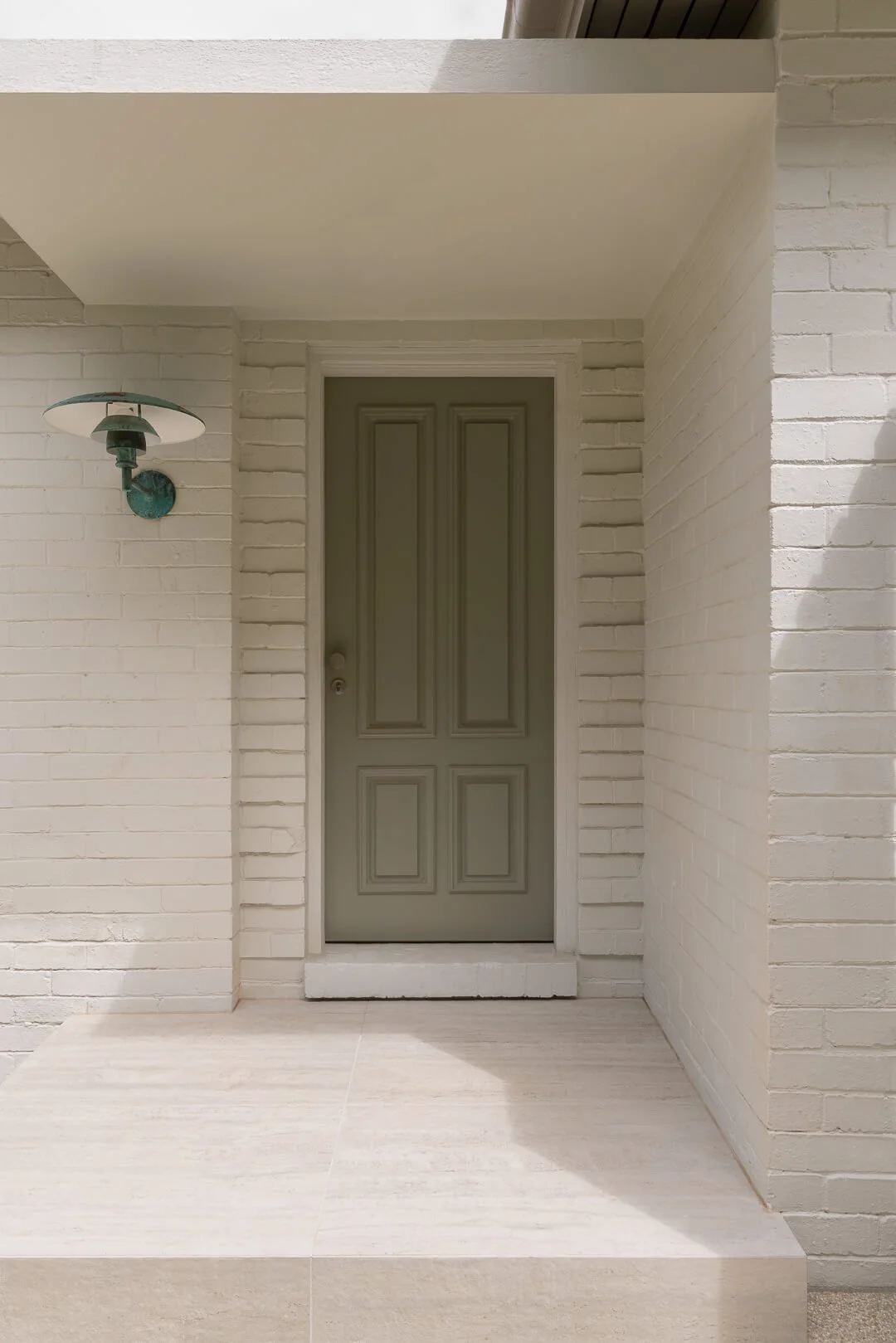
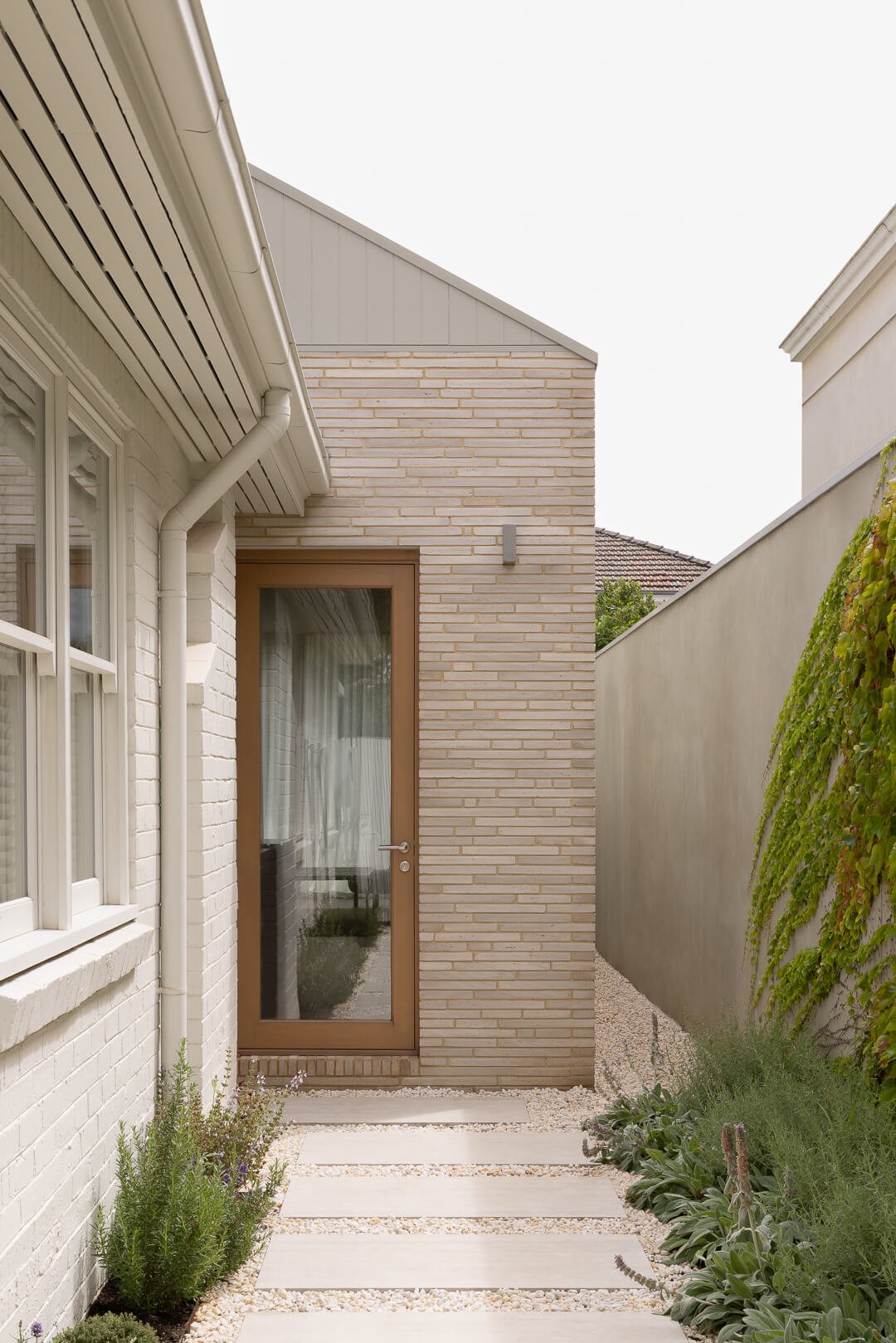
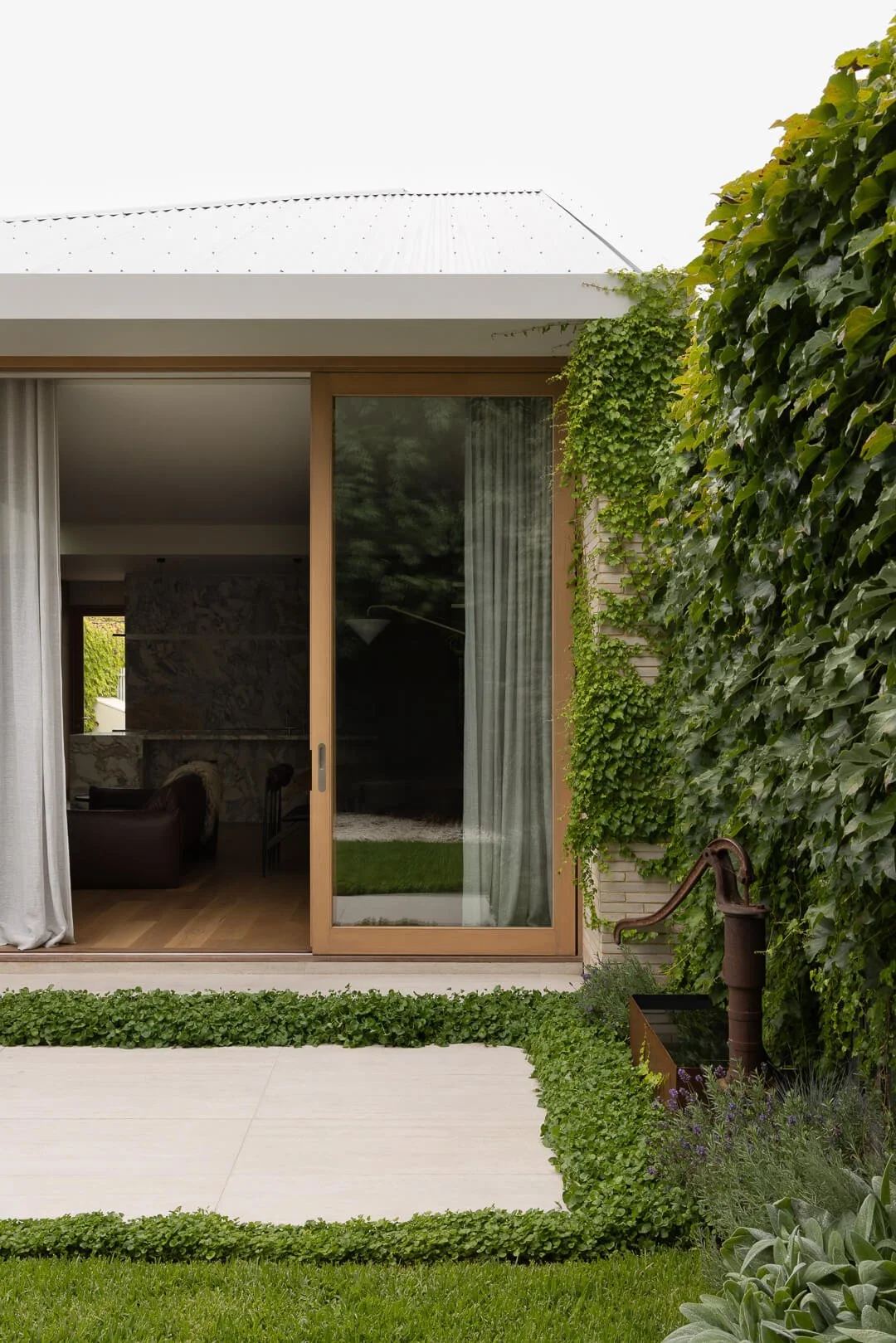
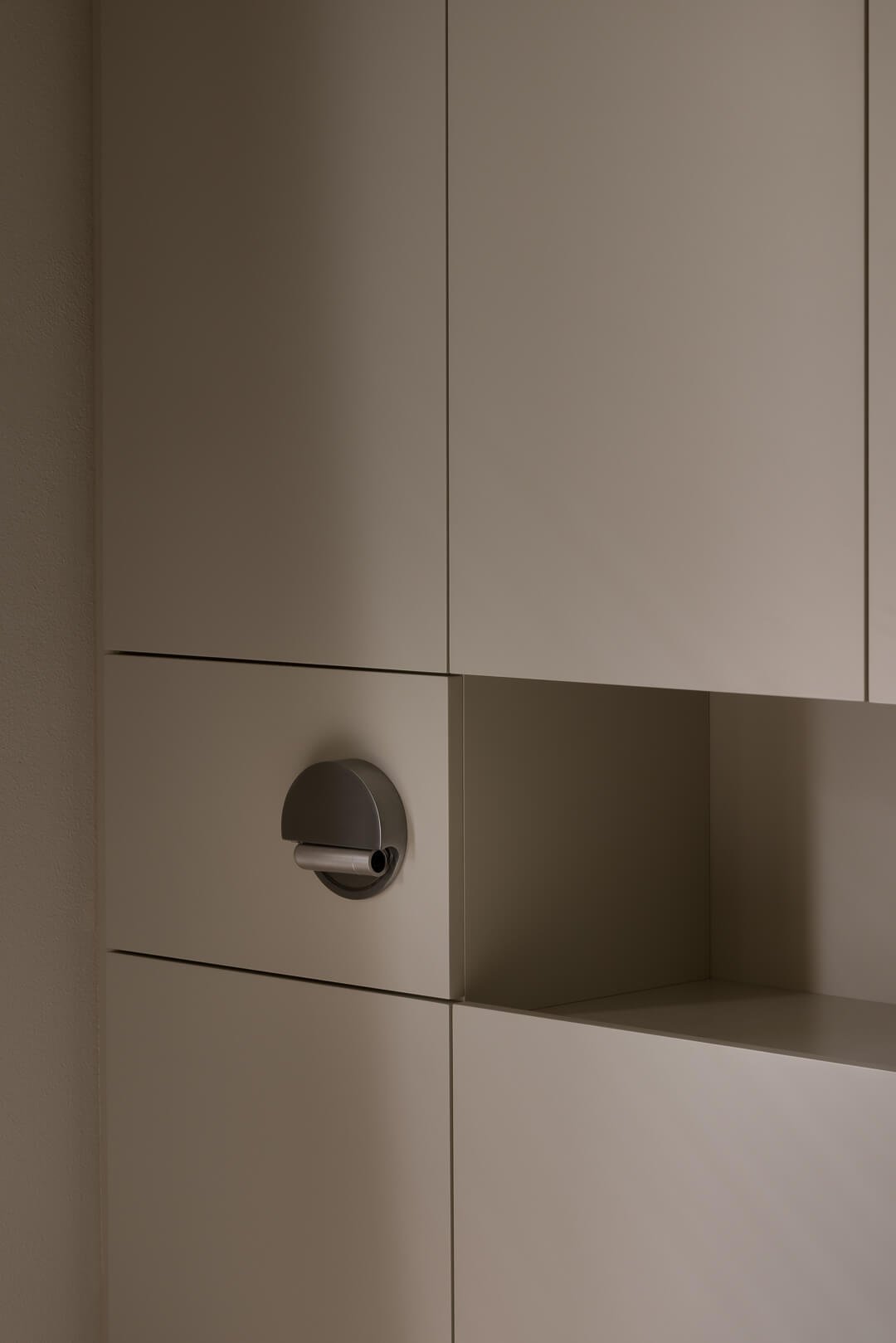
Silver House is a semi-detached white brick home that has been carefully reimagined through a considered architectural extension and interior refurbishment that balances memory, materiality and craftsmanship. The original dwelling, modest in scale and robust in construction, provided a grounding foundation for a contemporary addition - one that respectfully contrasts whilst remaining materially connected. The extension introduces a refined palette of narrow-format brickwork paired with corrugated iron roofing - a subtle reference to our client’s upbringing on a farm in central Victoria. Whilst this rural vernacular isn’t replicated directly, the material language aims to reference these familiar elements into a more contemporary expression. The slim brick profile creates texture and rhythm whist the corrugated iron brings a quiet utilitarian honesty and robustness. To provide relief, timber-framed doors and brushed nickel fixings are bookended by these materials, connecting the exterior to the interior and establishing a dialogue between urban context and rural memory.
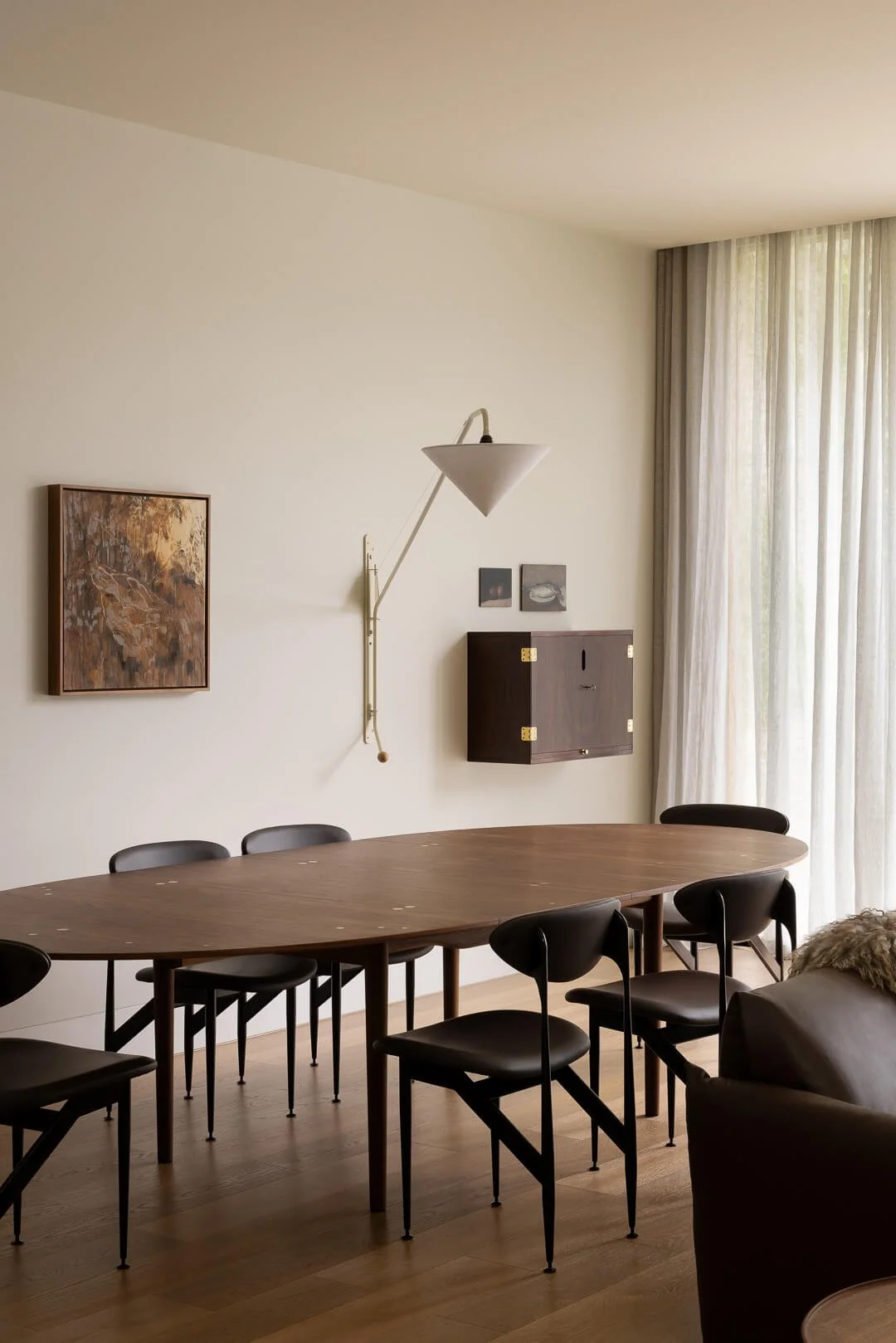
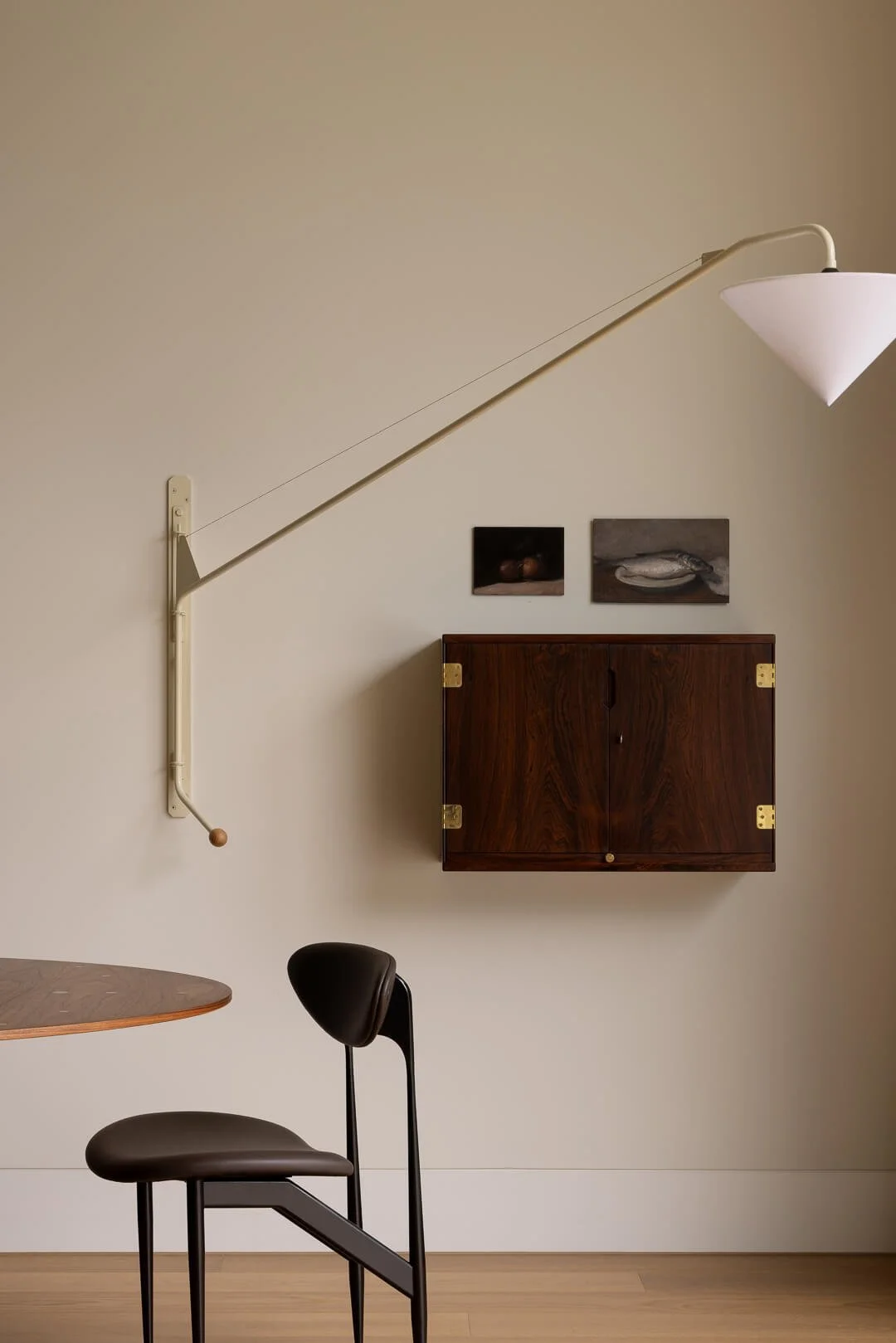
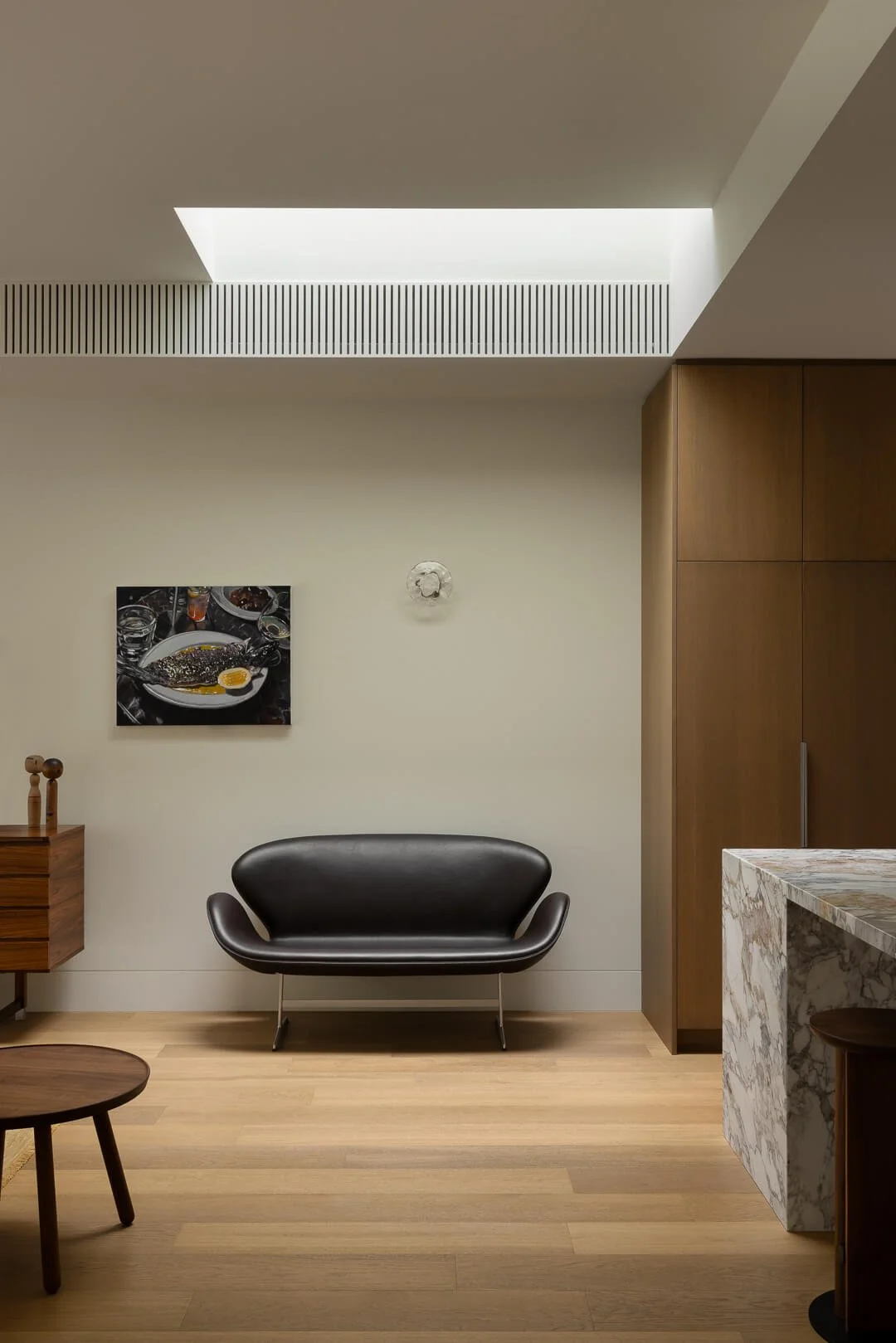
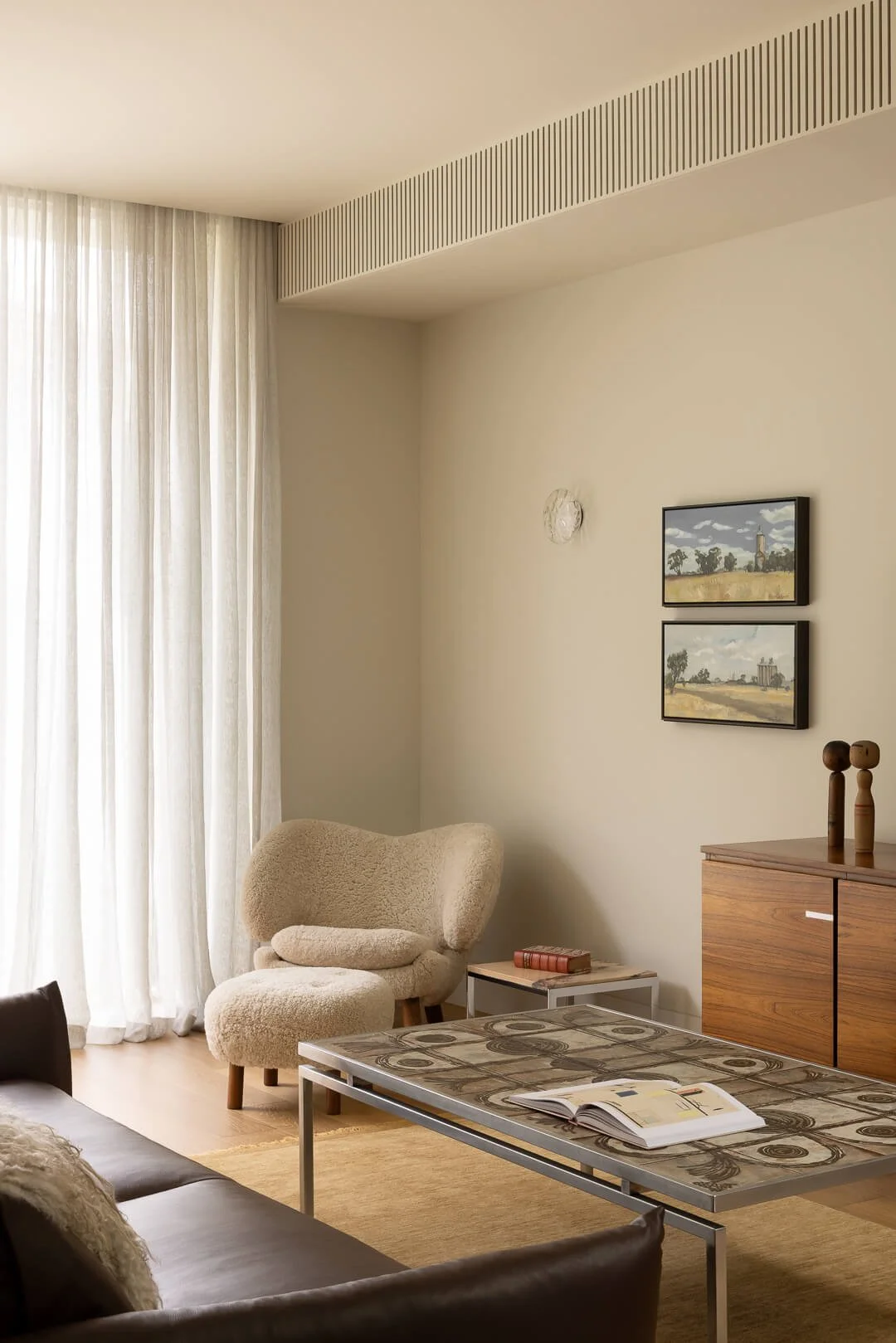
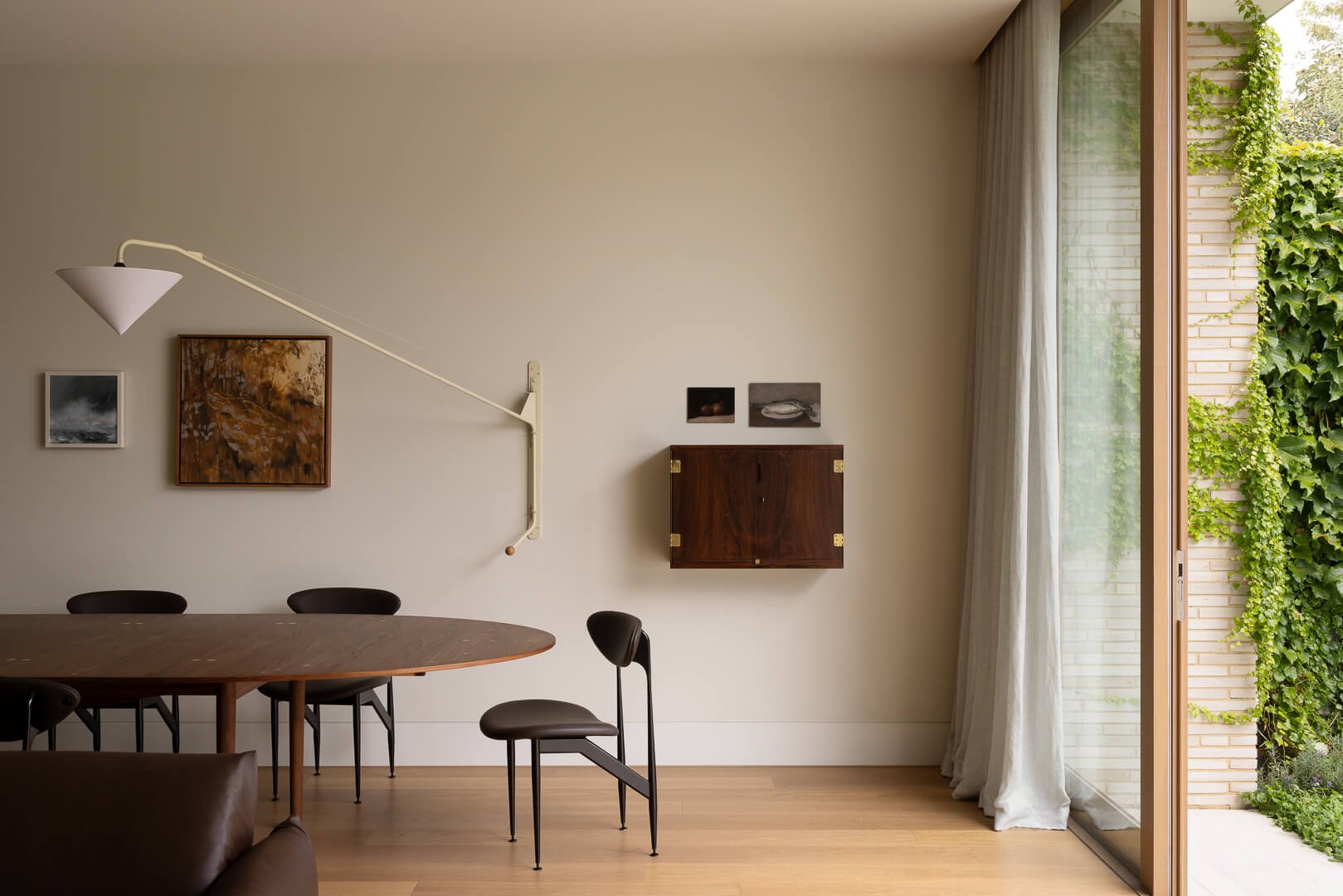
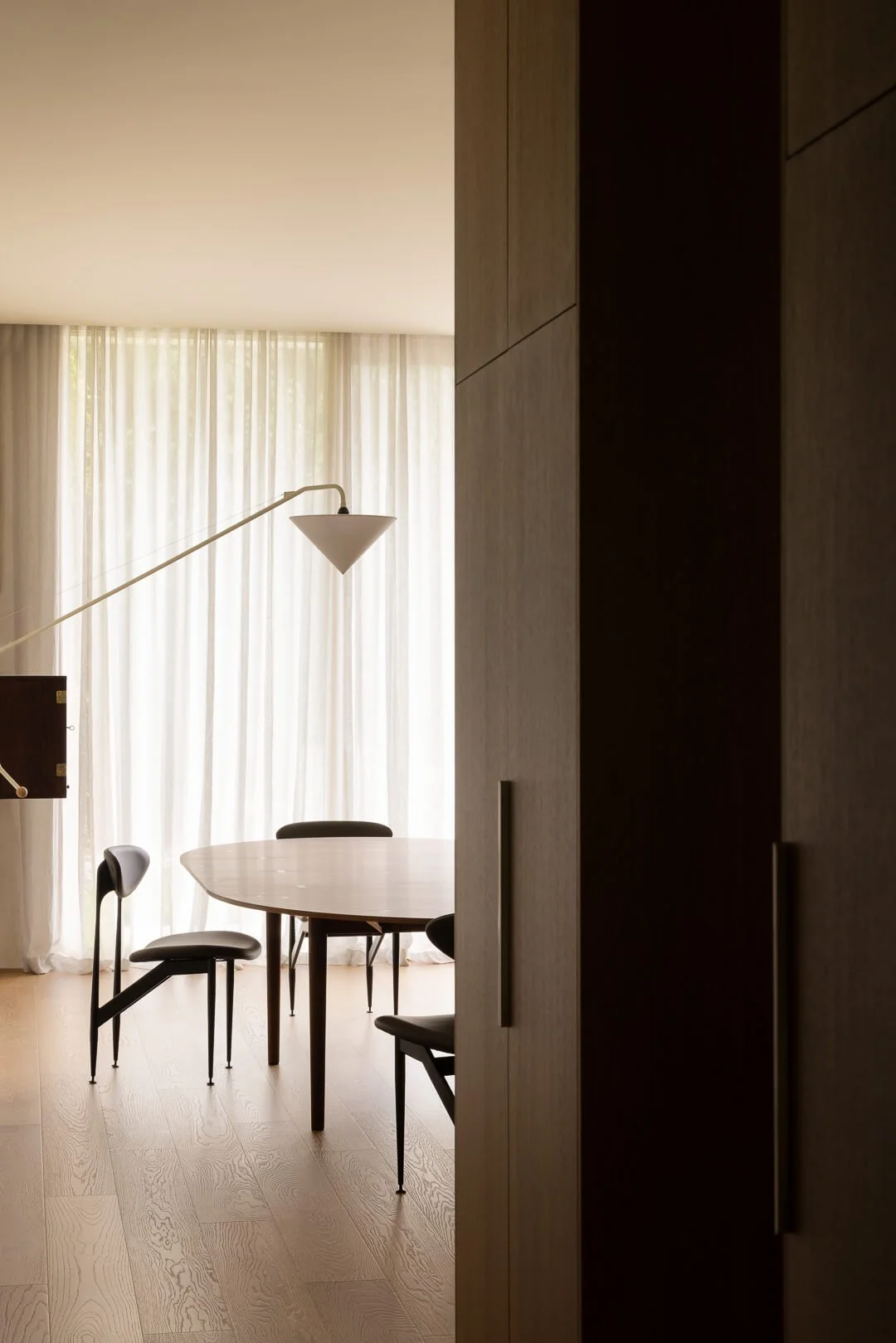
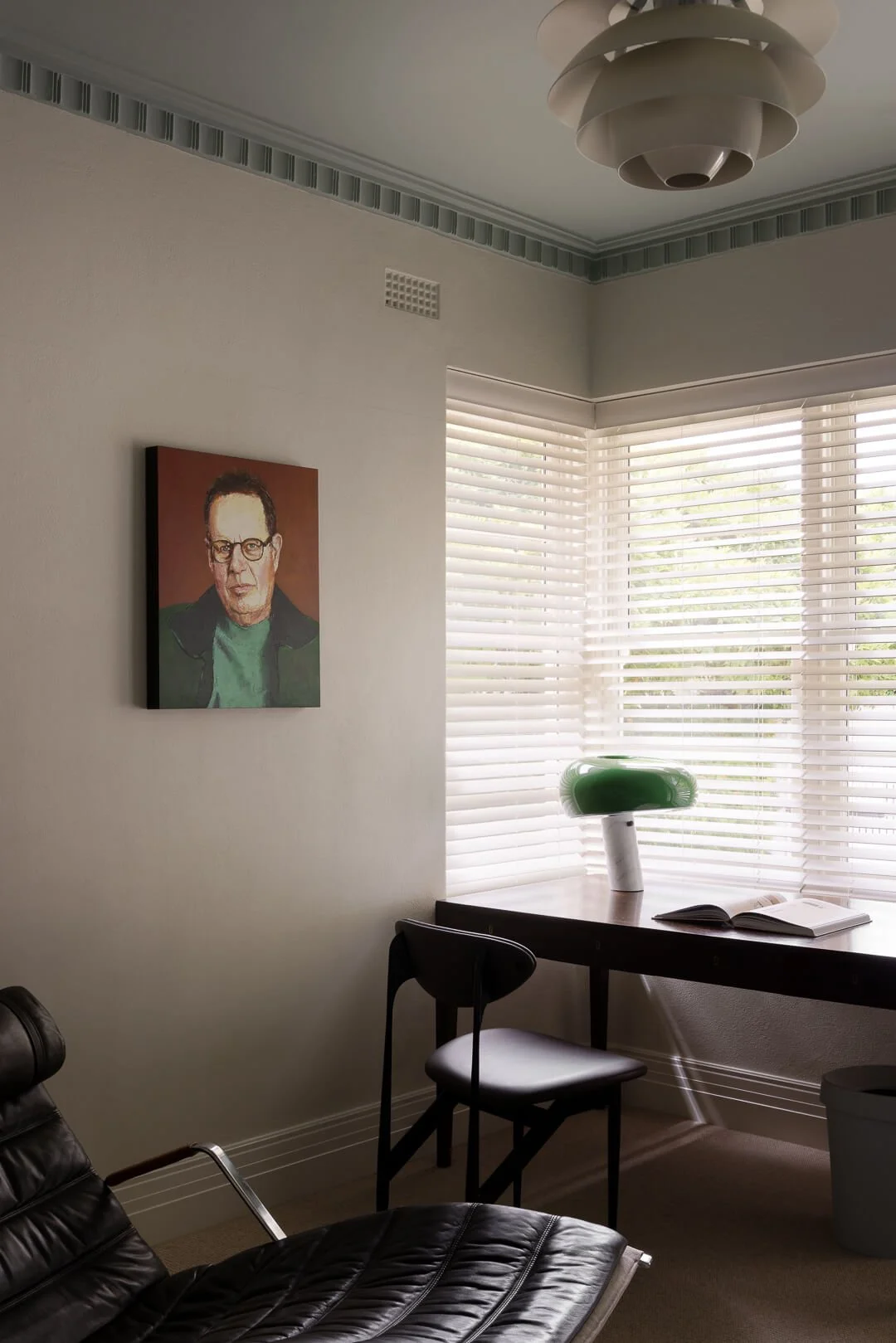
Internally, the design process began not with the architecture, but with the client’s remarkable collection of artwork and mid-century Danish furniture. These items became the conceptual starting point and foundation for the interiors, shaping spatial planning, proportion and the overall atmosphere of each space – even prior to the selection of materiality. Rather than treating the furniture and artwork as an afterthought, each room was conceived as a setting in which the pieces could be properly appreciated. House of Finn Juhl’s ‘Silver Table’ and ‘Sheepskin Pelican Chair’ alongside other design classics such as Fabricius & Kastholm’s ‘FK87 Grasshopper Chair’ and Arne Jacobsen ‘Swan Sofa’ are just some of the beautiful pieces showcased. These furniture heirlooms are further complimented by the introduction of more contemporary furniture and decorative lighting, all of which are purposely sourced from Australian designers and makers.
Location: Toorak, Victoria
Floor Area/Land Area: 144sqm/328sqm
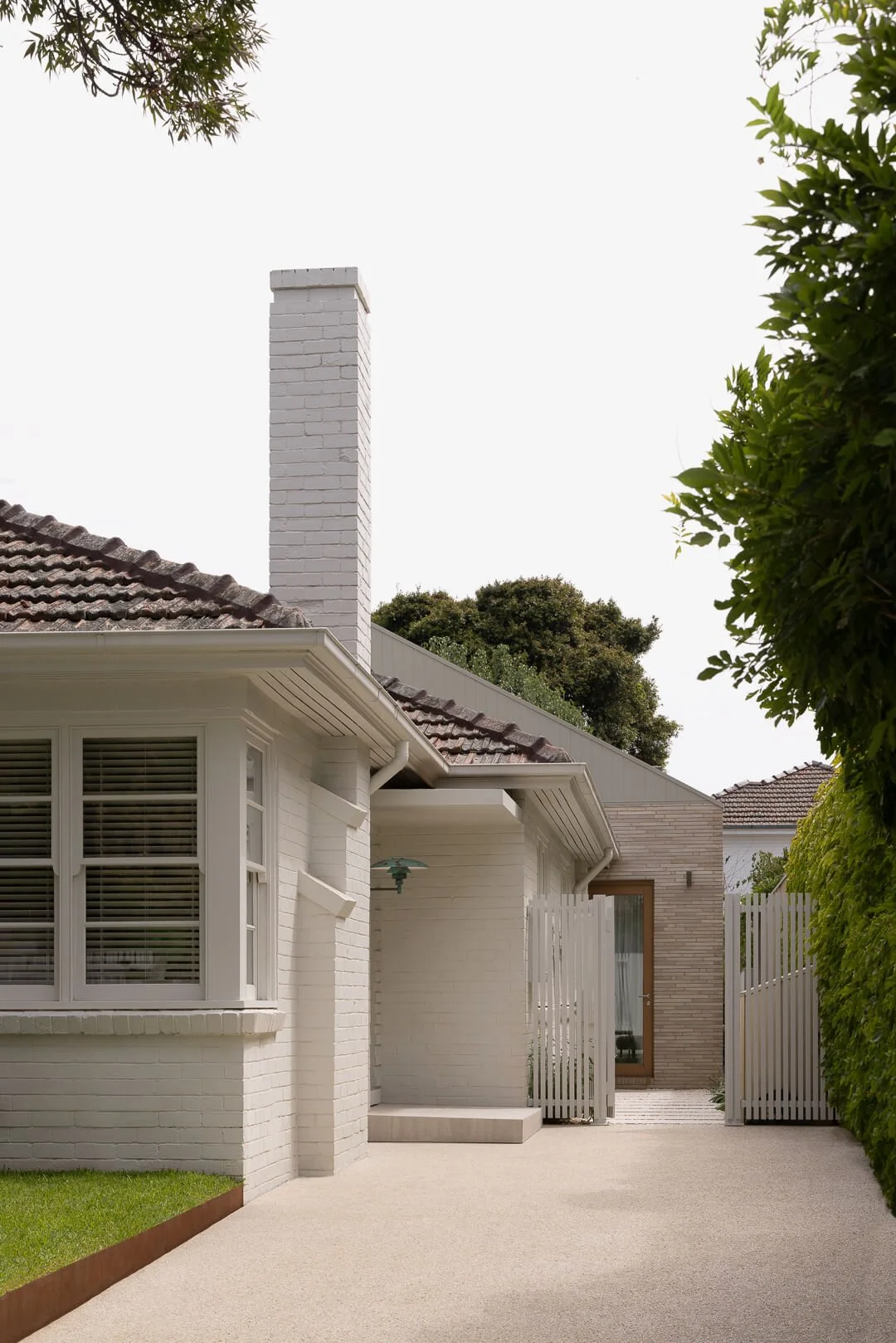
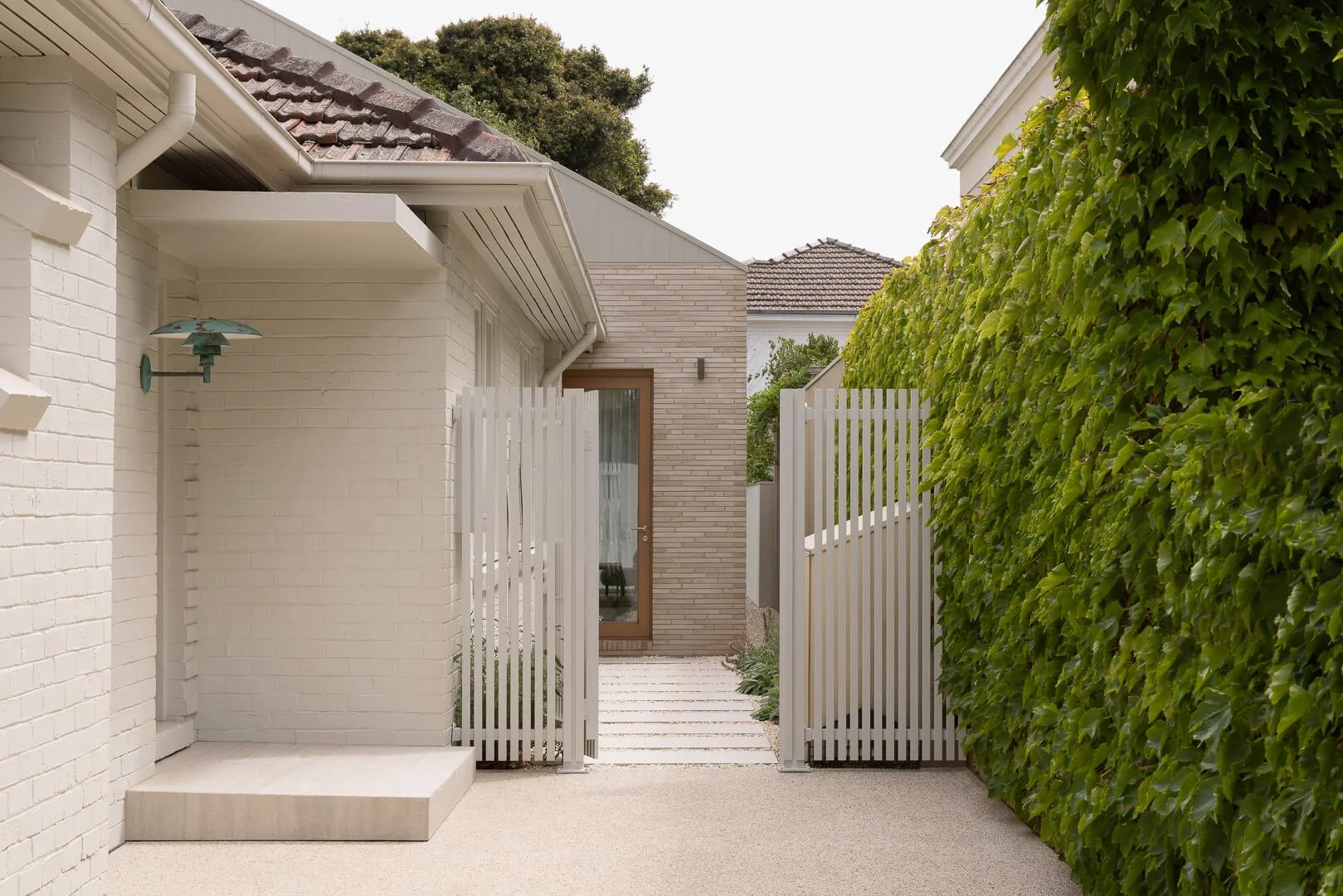
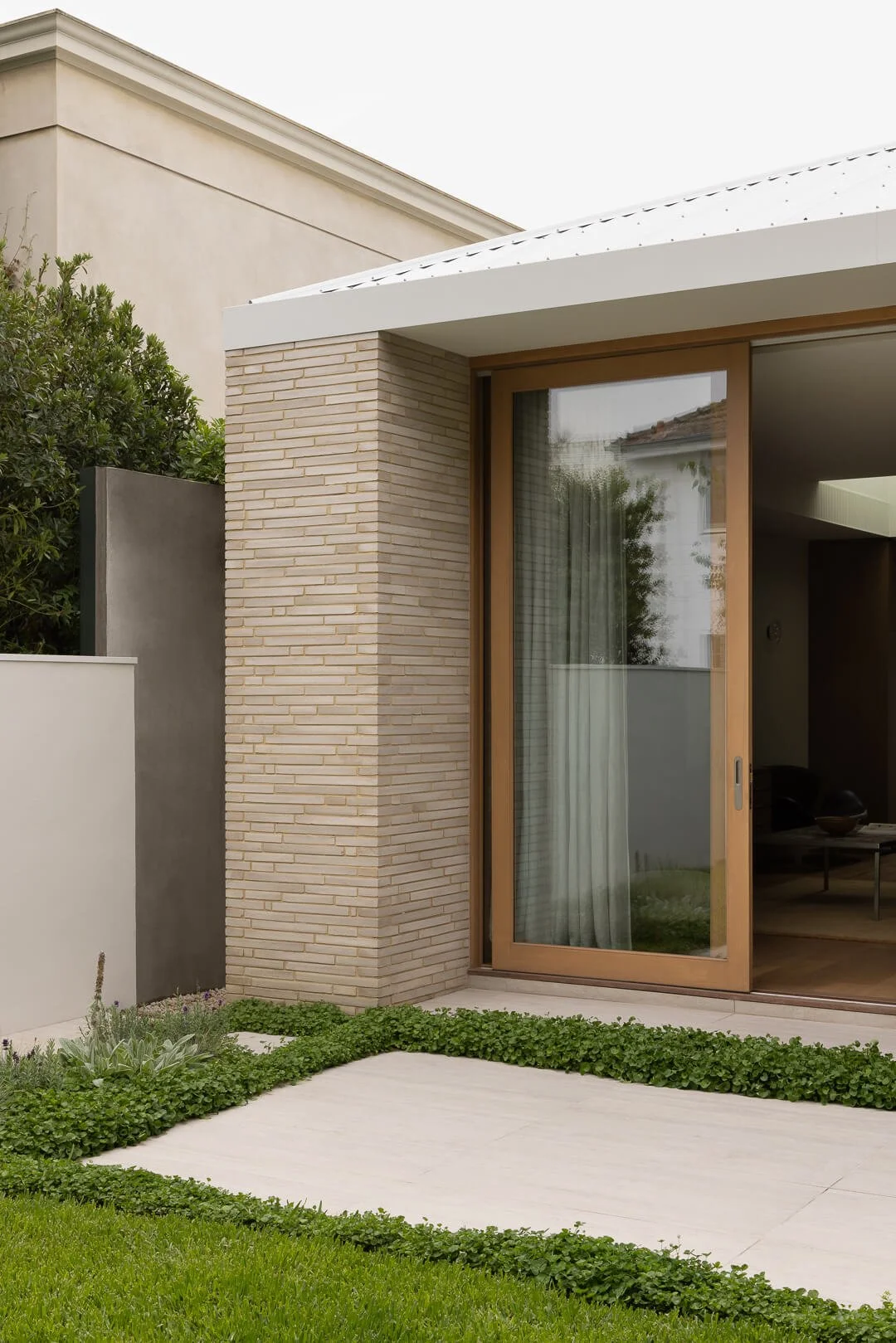
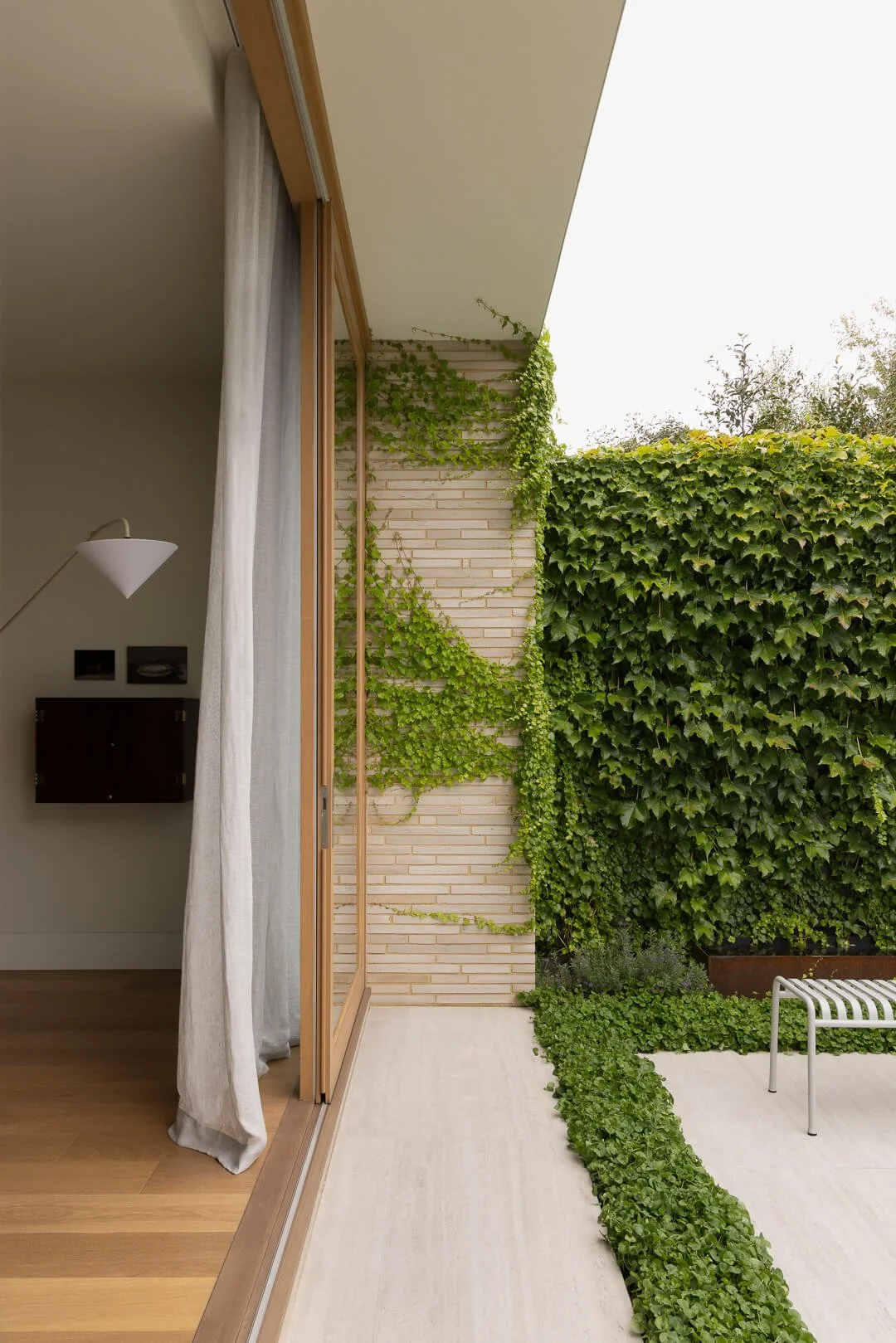
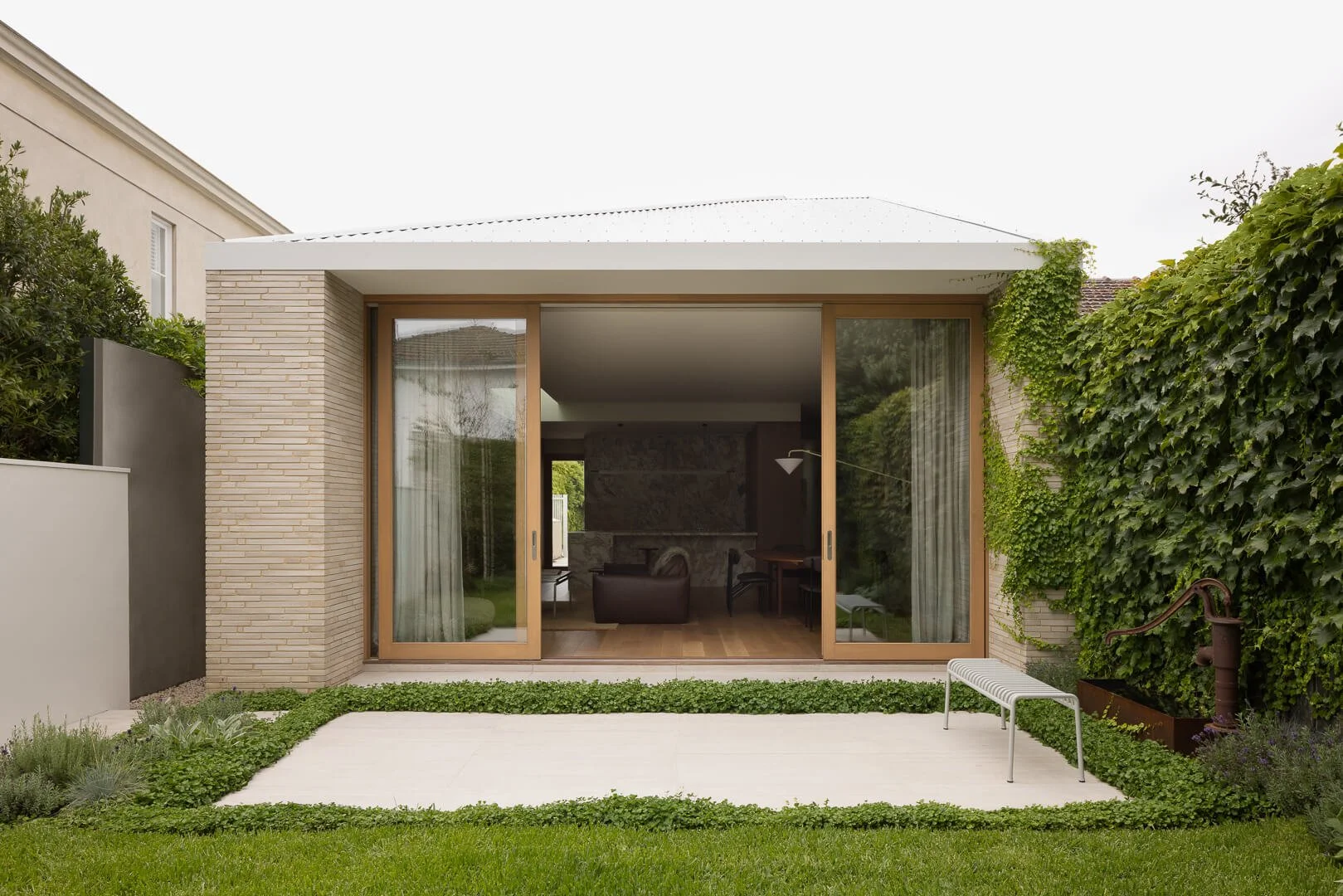
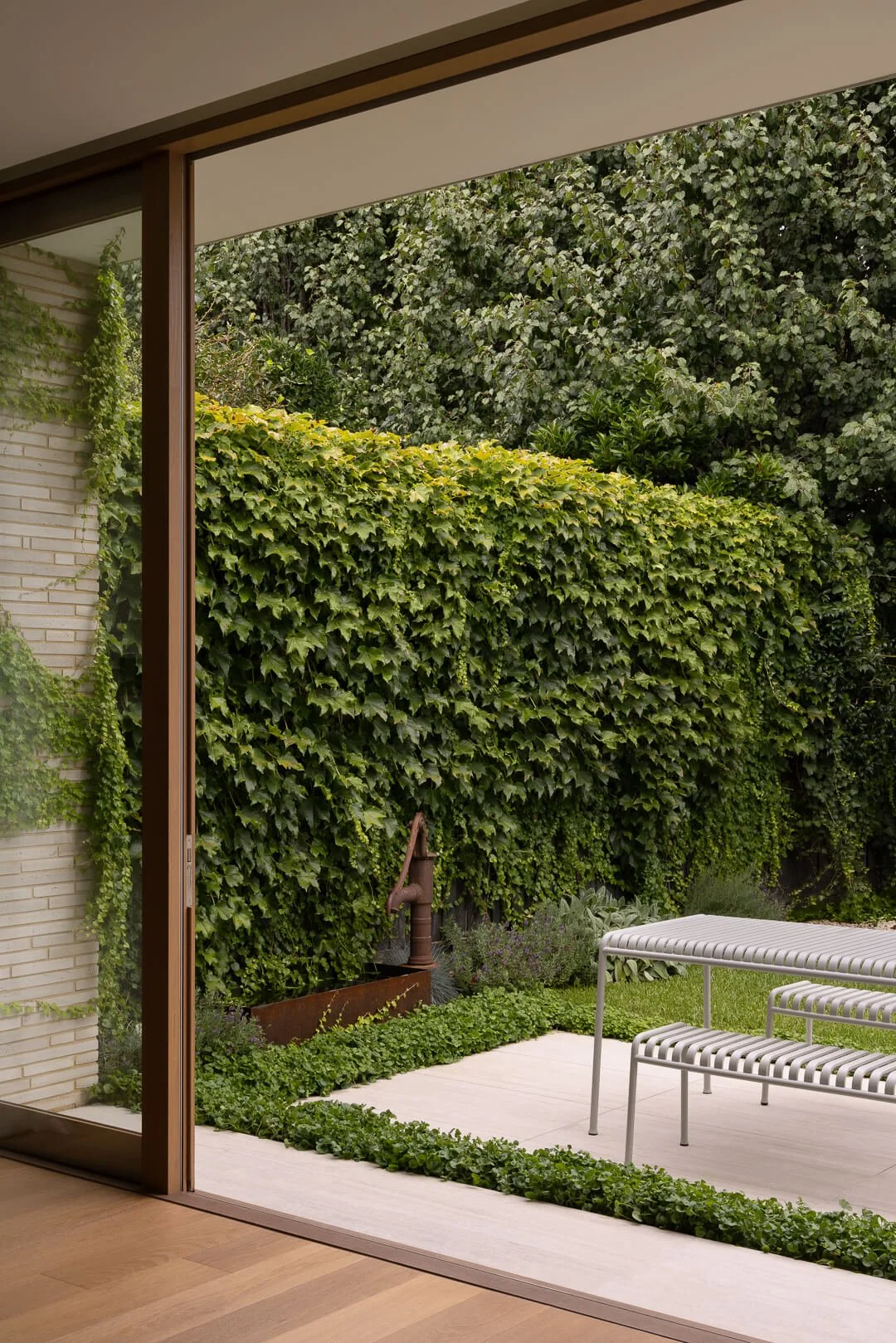
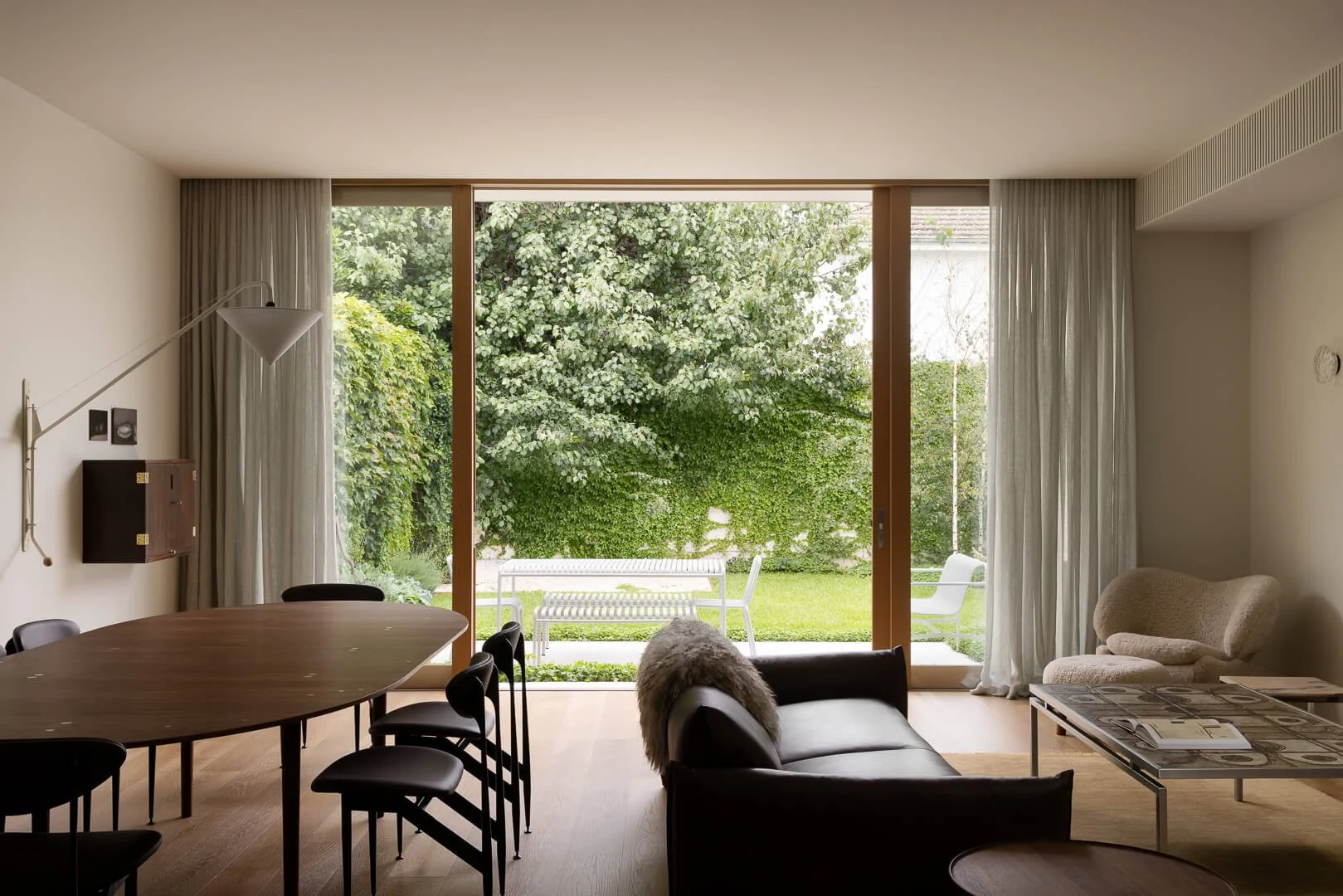
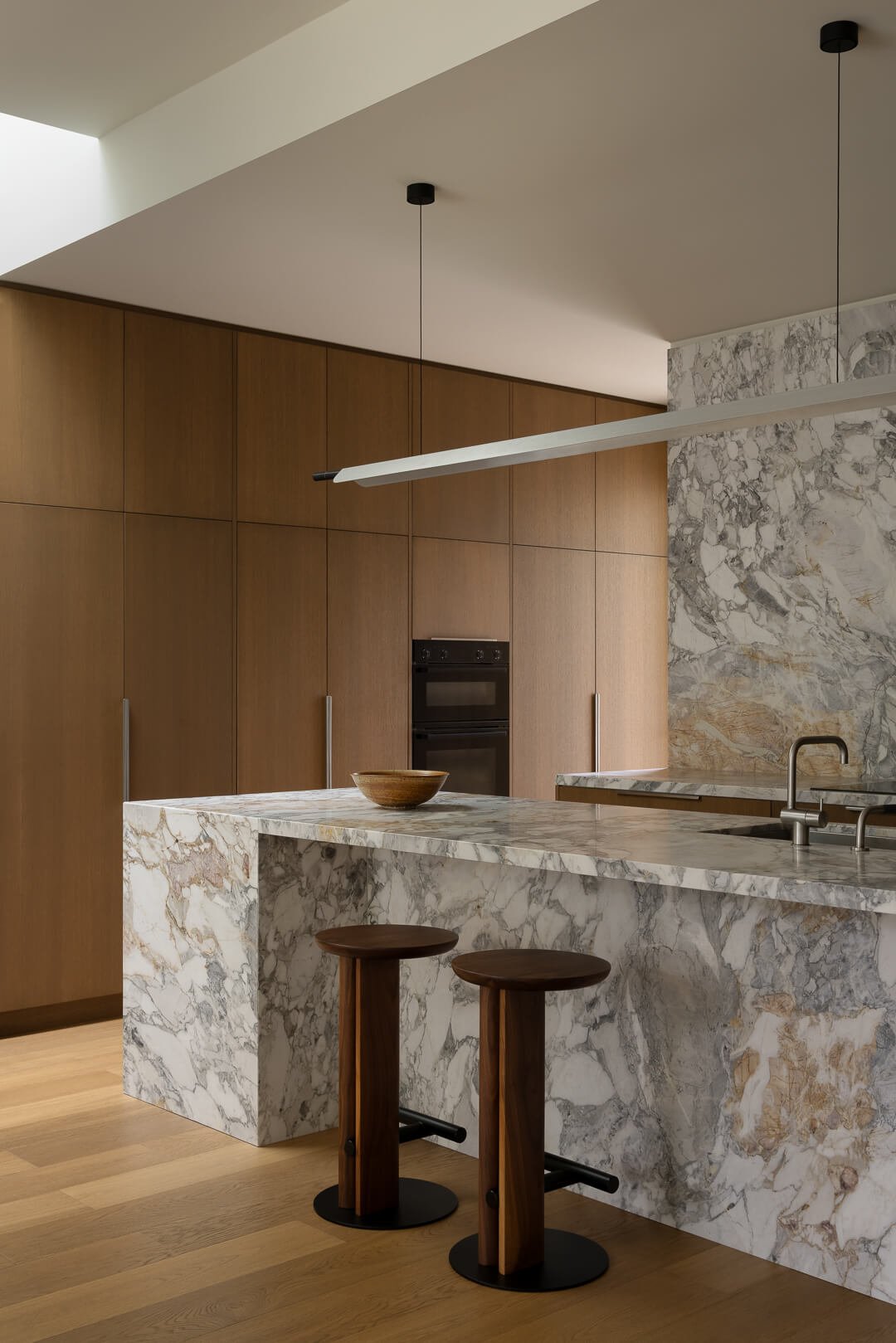
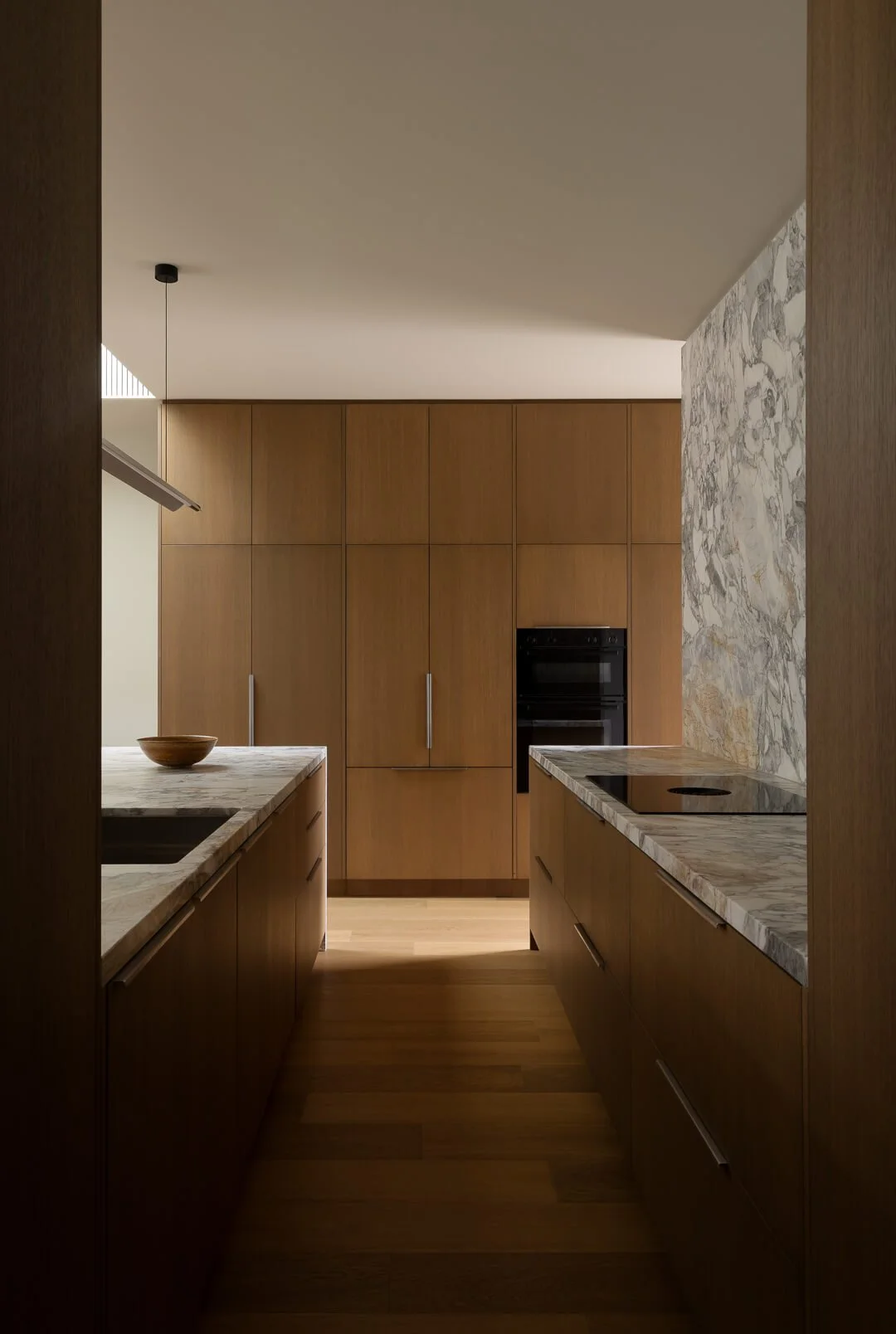
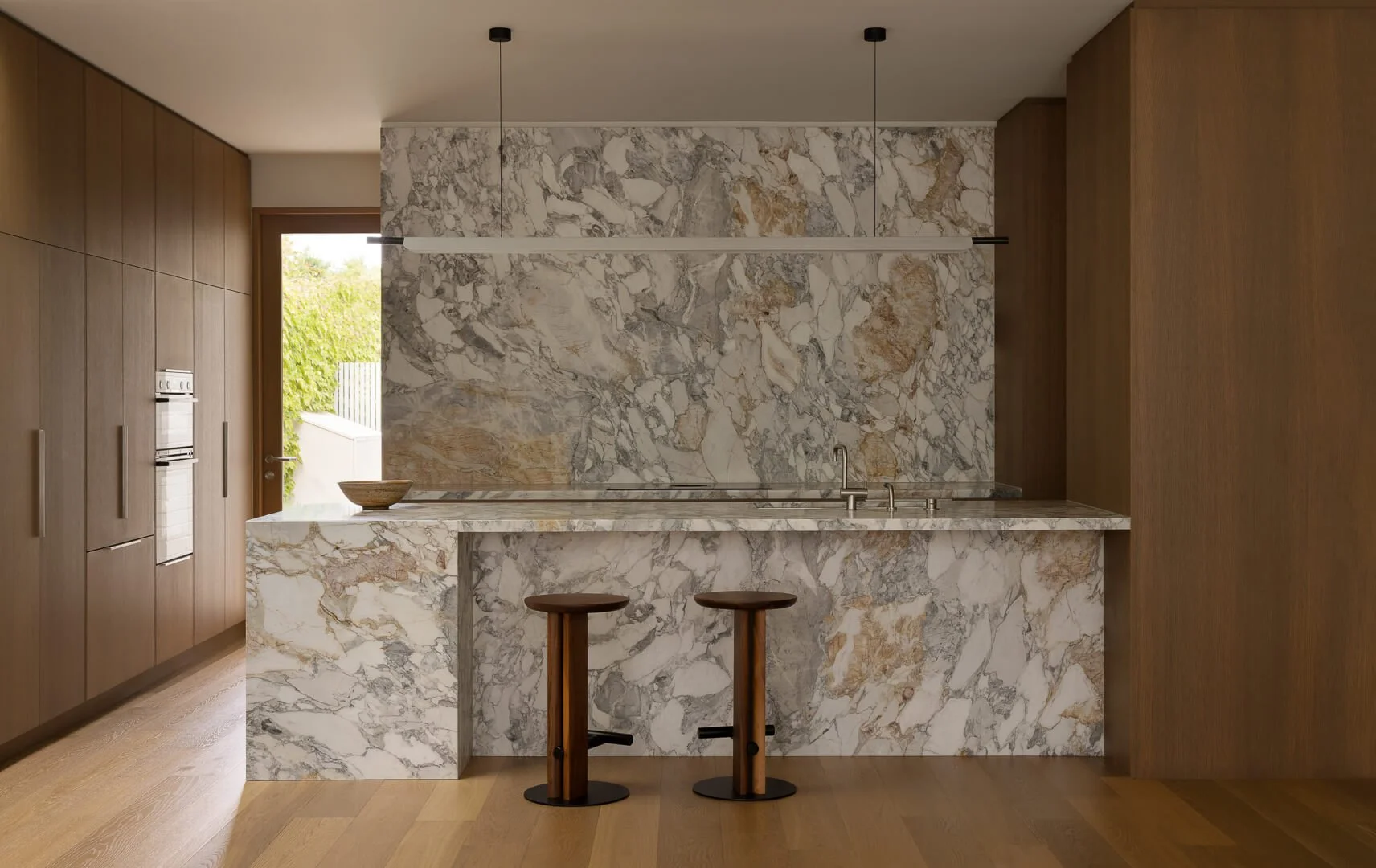
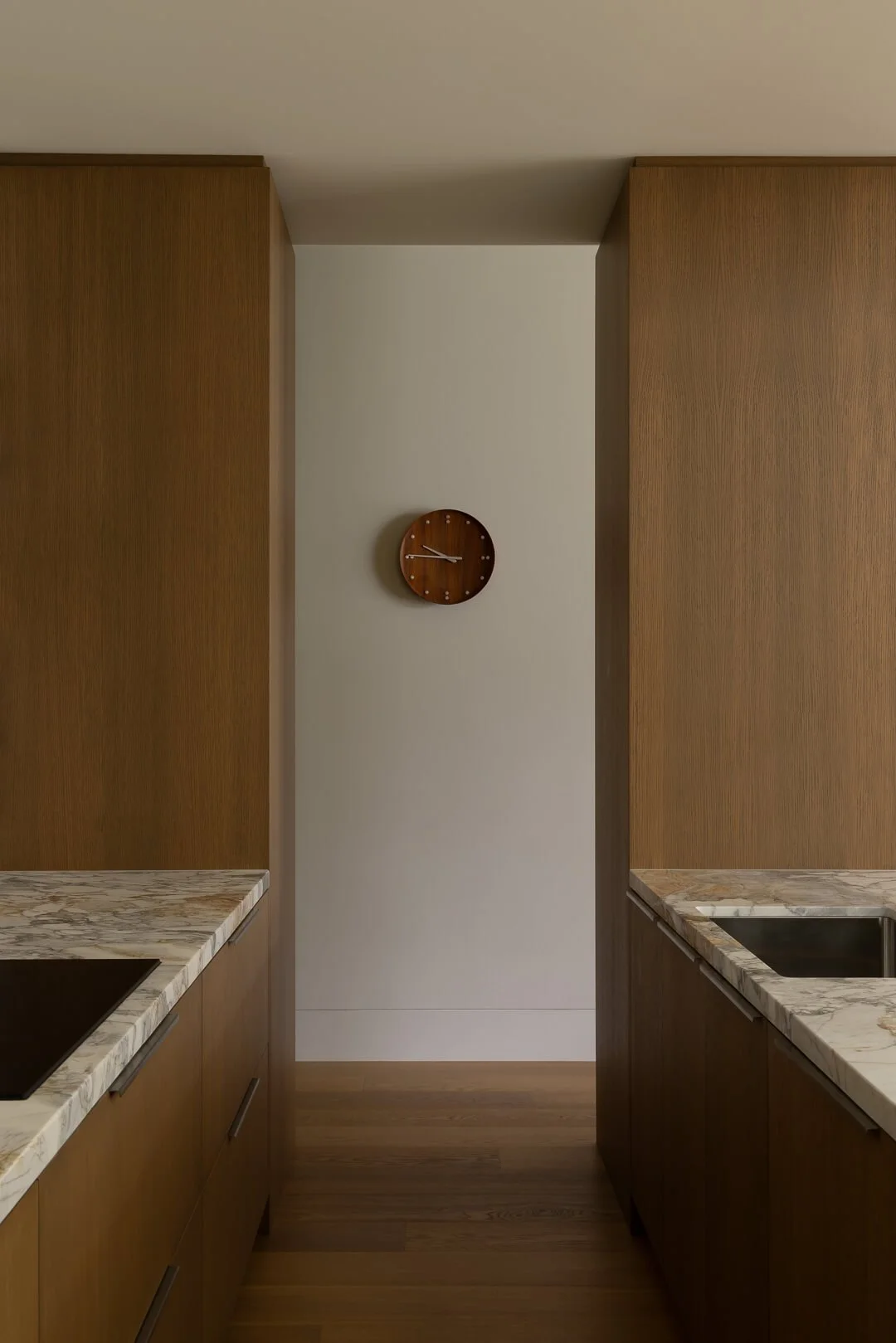
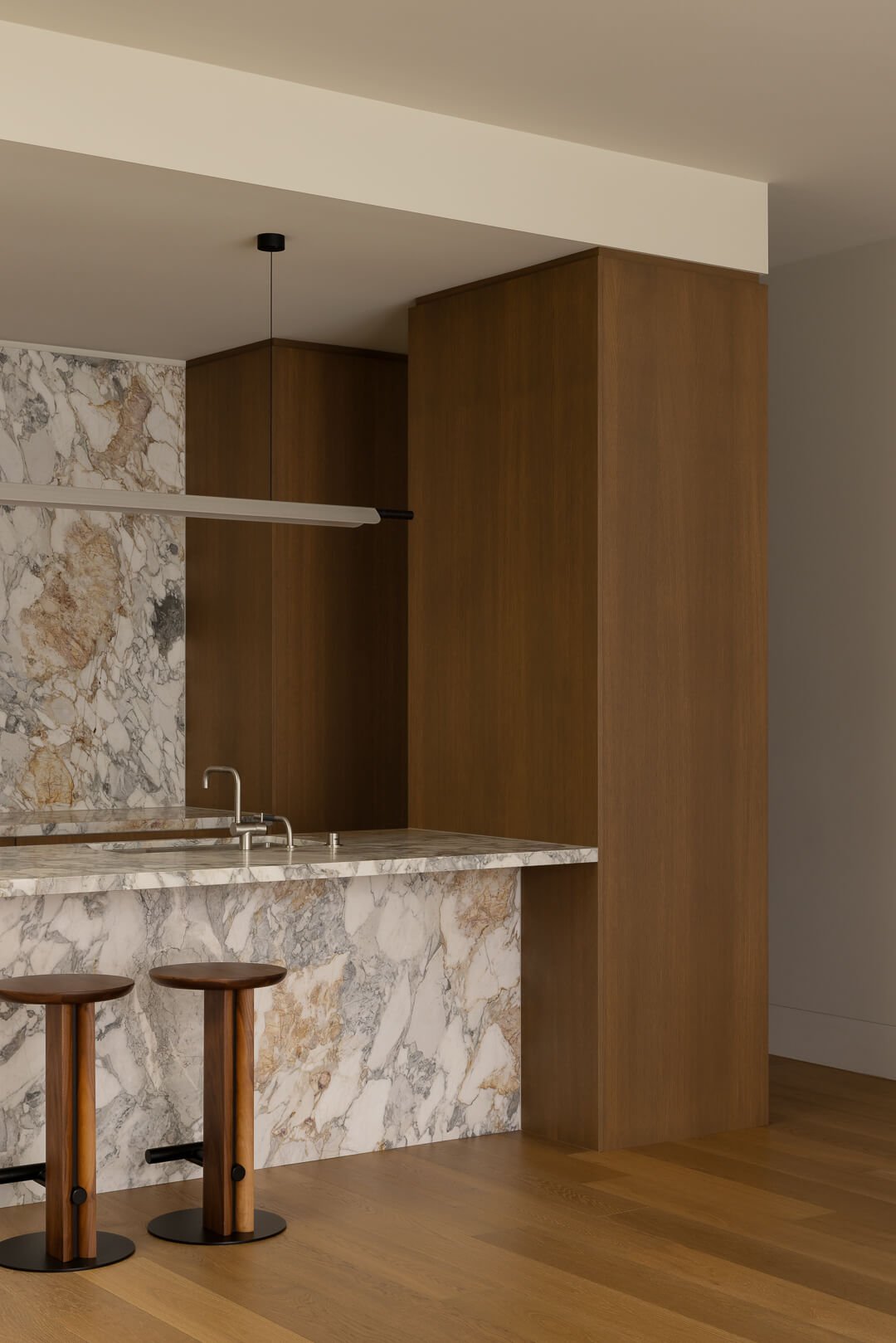
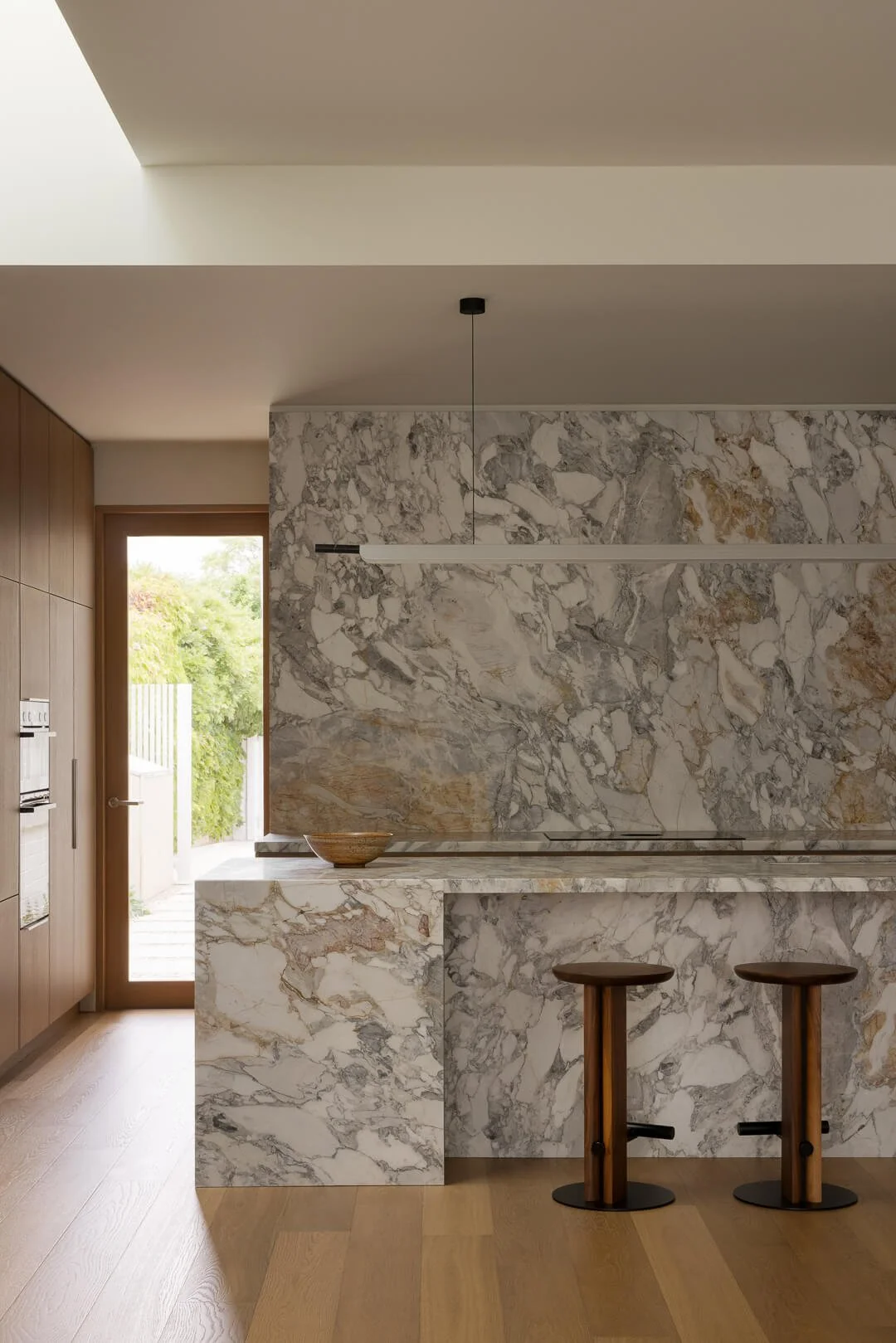
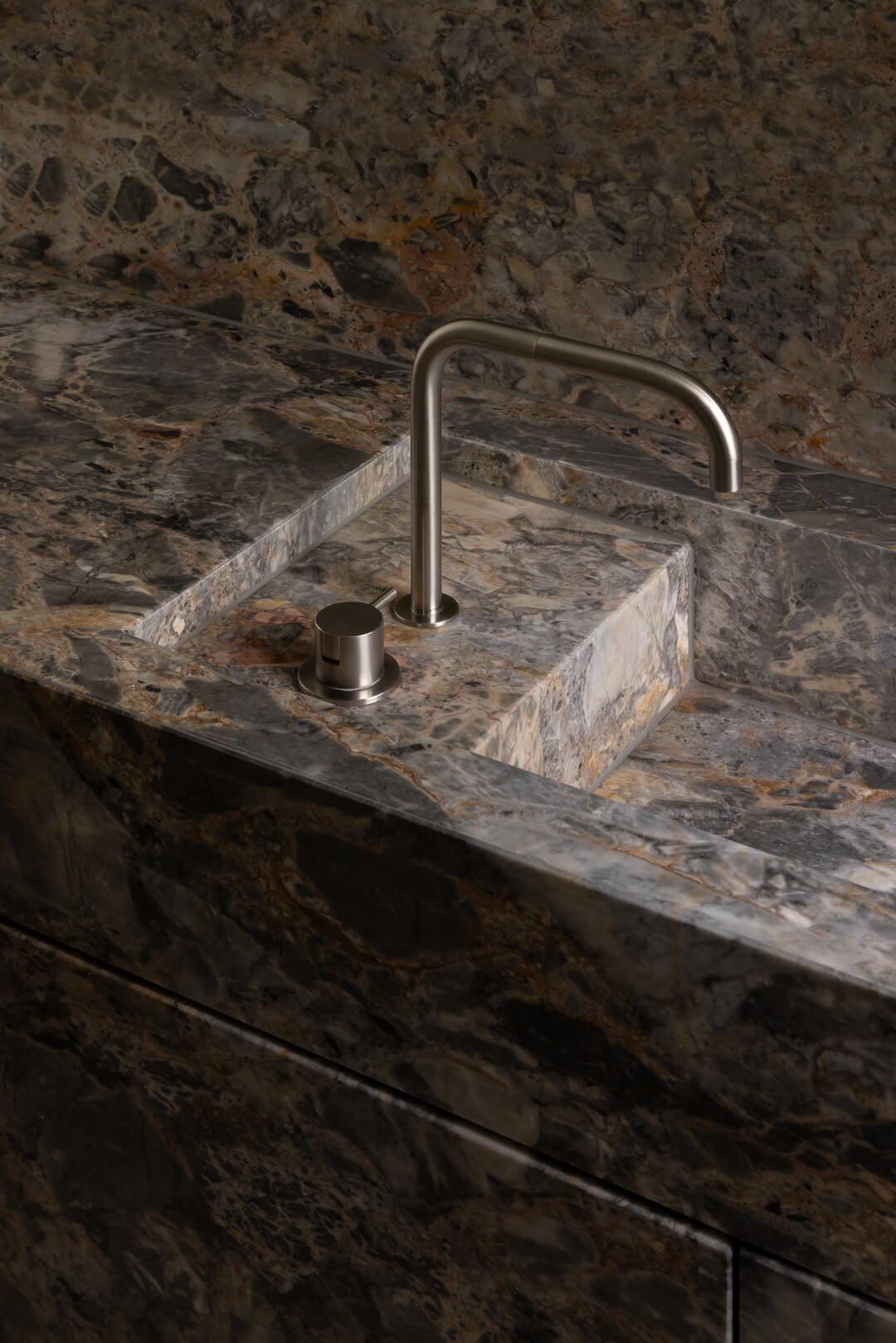
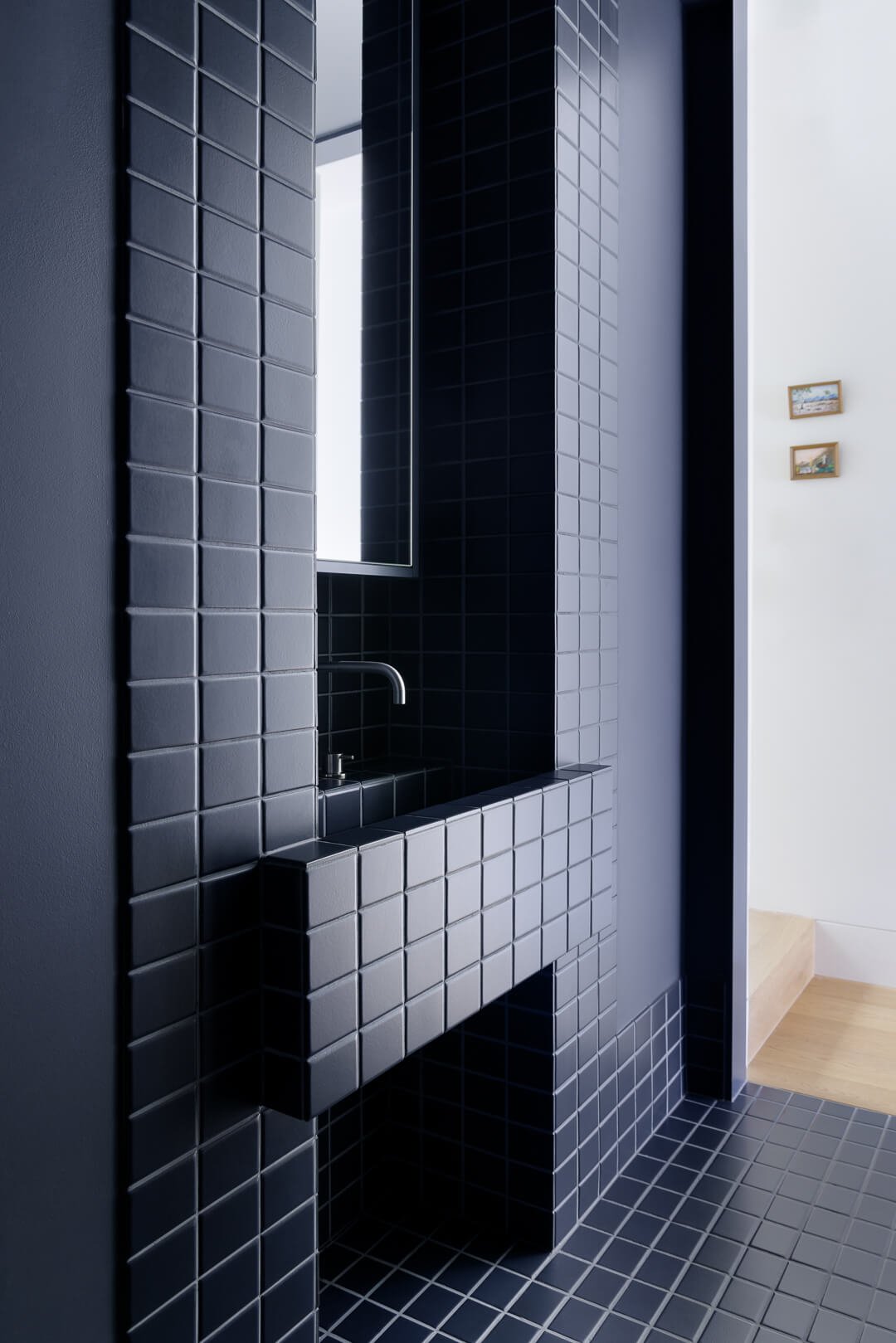
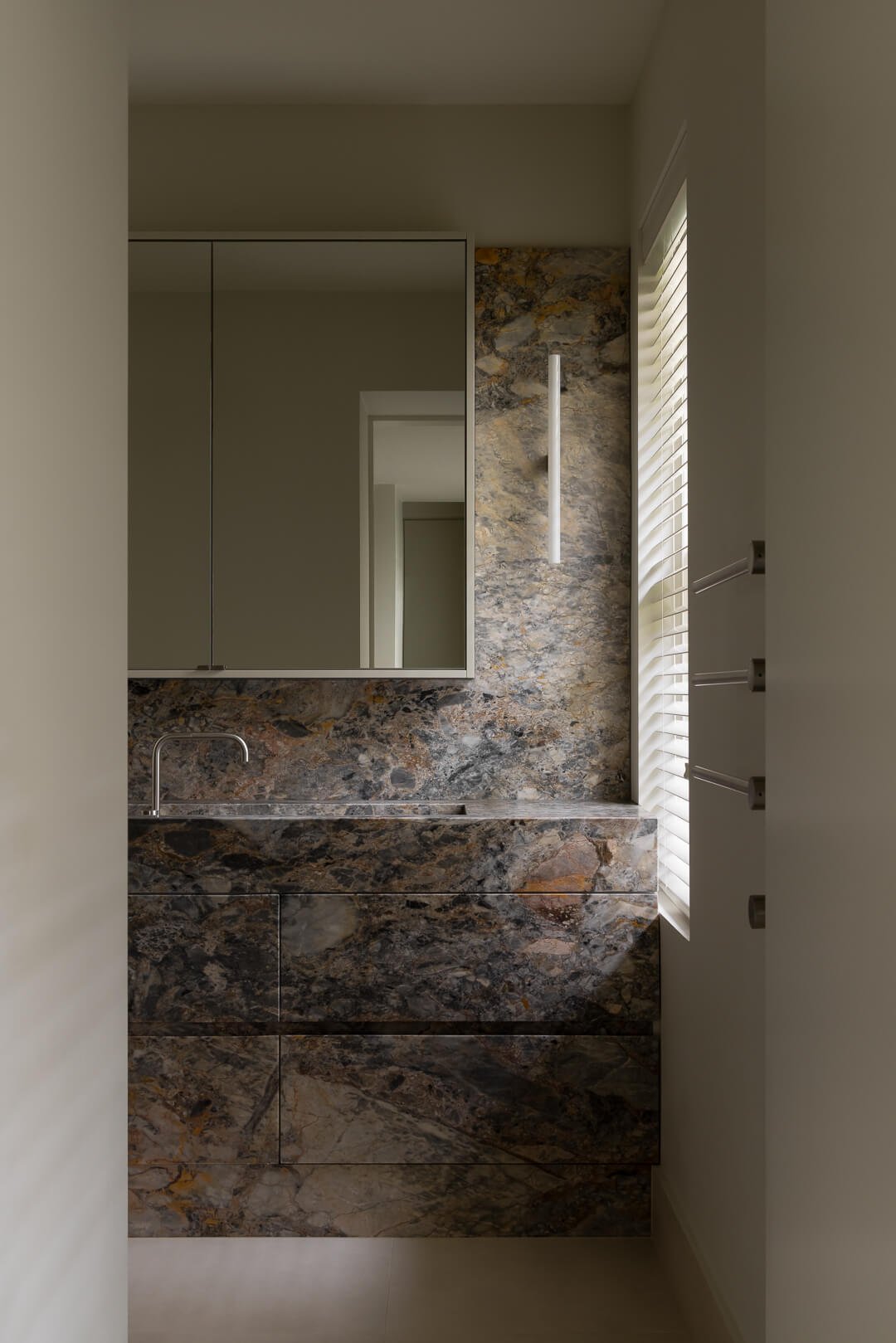
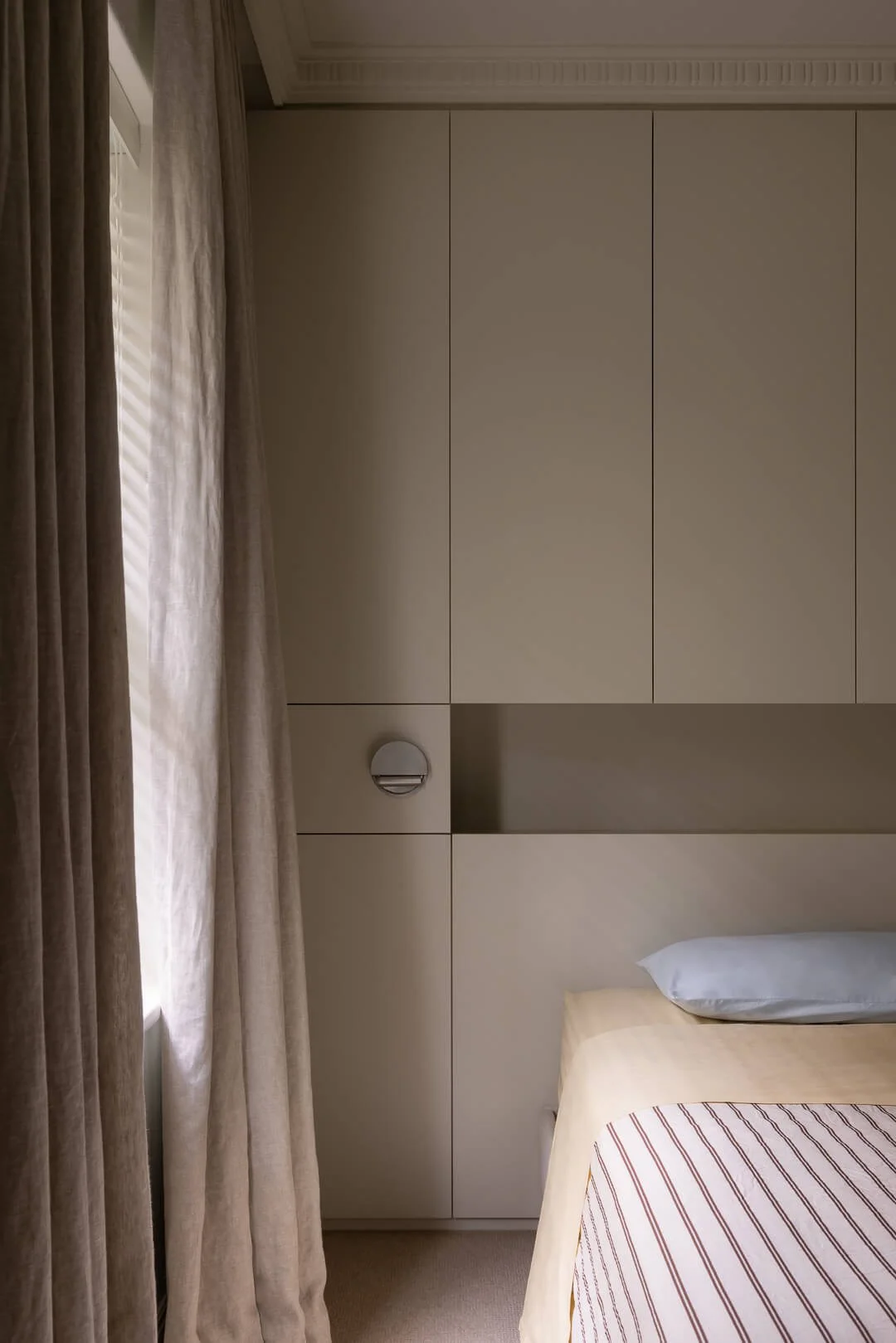
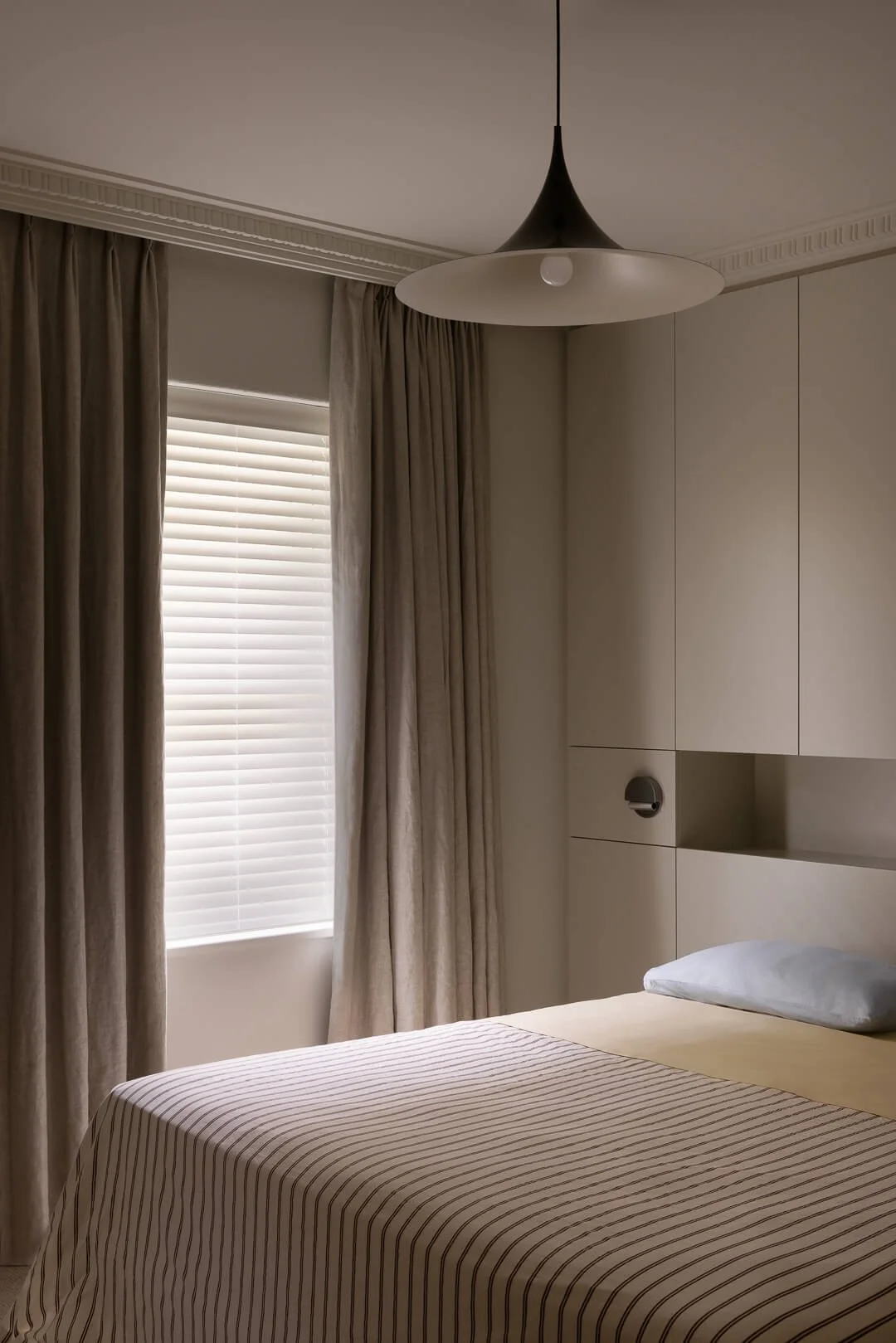
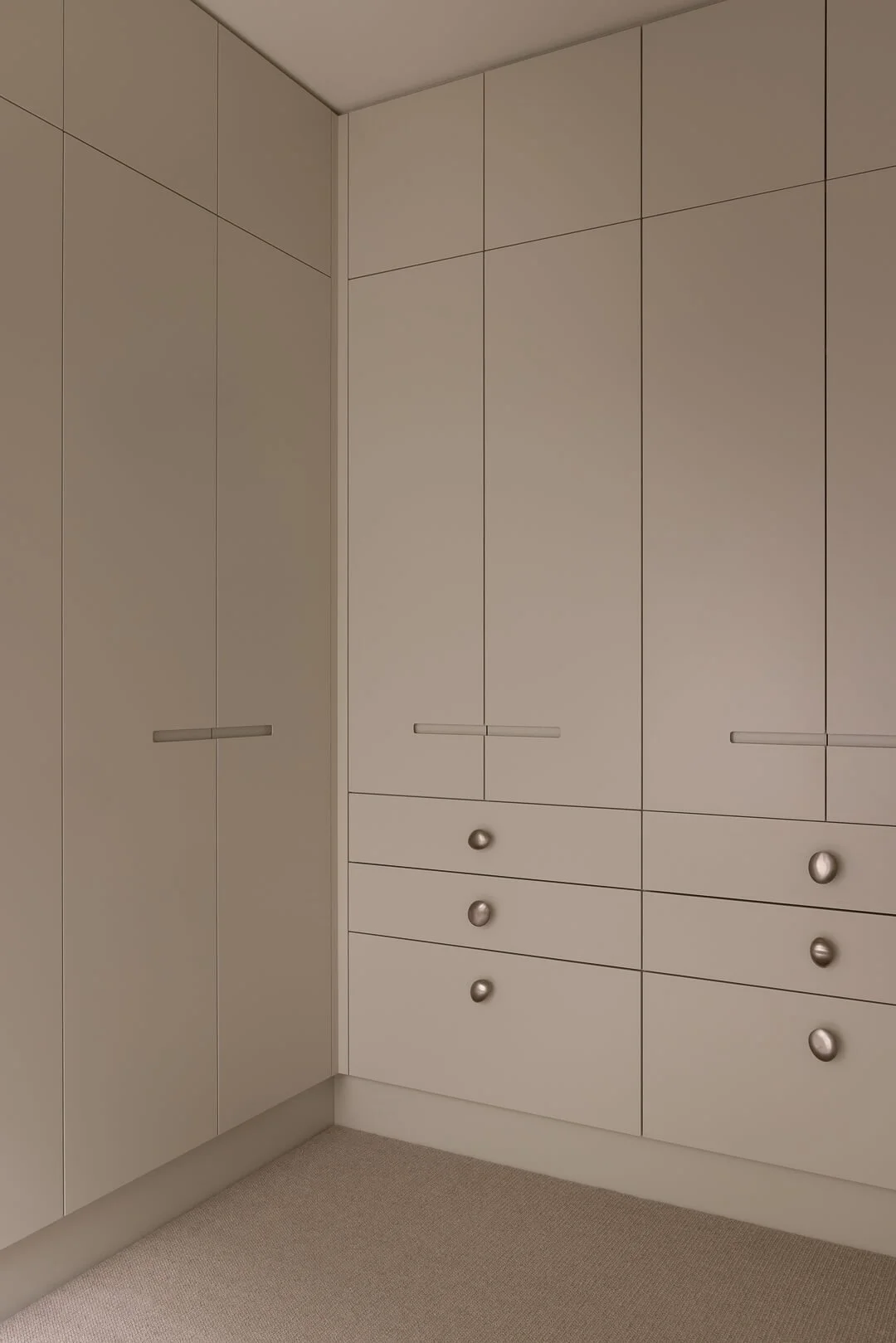
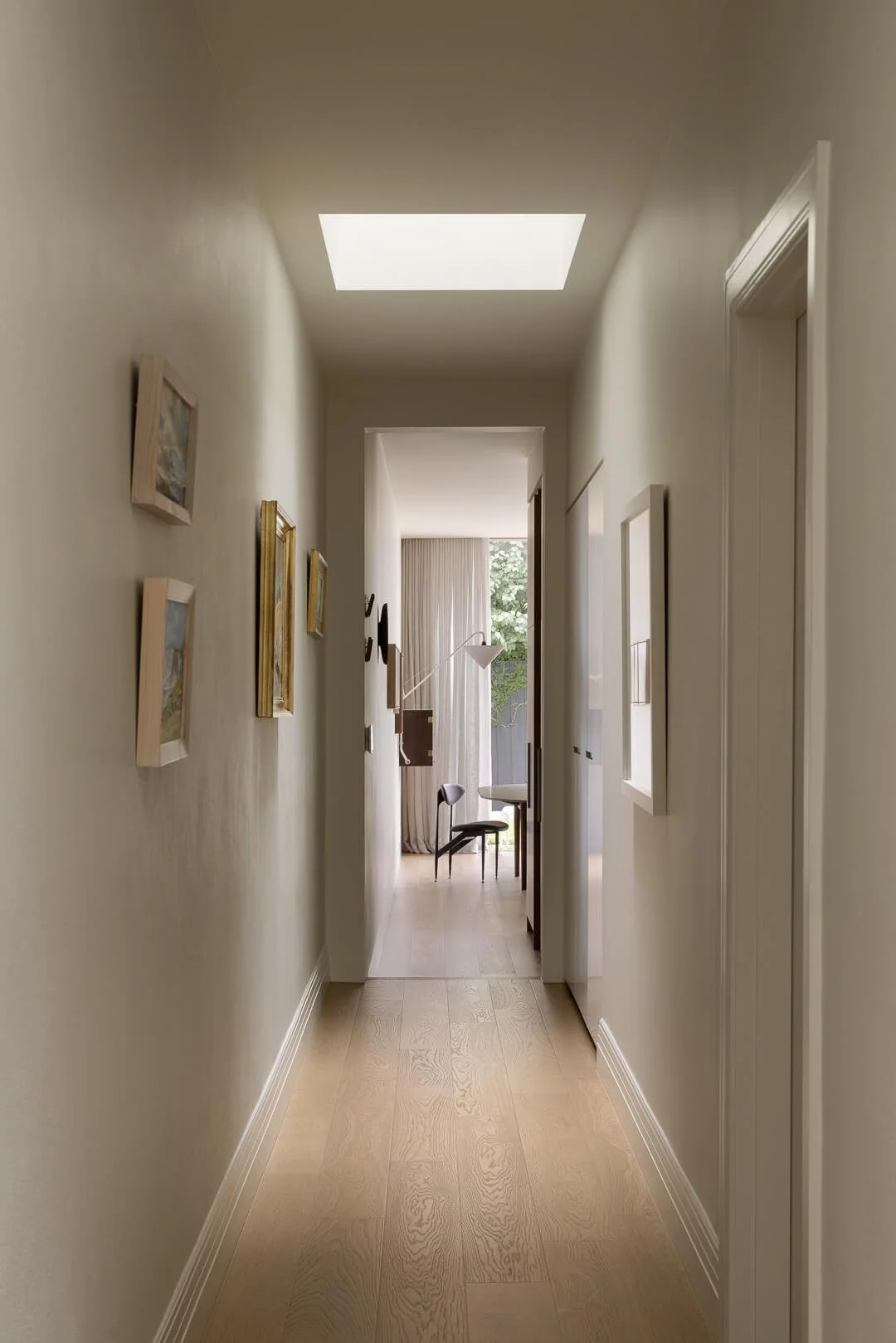
The interiors more broadly celebrate sightlines and framed views, the connection between spaces carefully considered to allow furniture and joinery alike to be viewed from multiple perspectives. The introduction of a skylight and generous full height rear sliding doors also enhance natural light in the rear living zone, allowing the warmth and sculptural qualities of the interiors to take precedence. Soft neutrals, warm timbers and restrained detailing create a calm backdrop, layered with materials such a stone and brushed nickel, chosen for their tactility and longevity. In the ensuite, Queensland-quarried ‘Kalana’ natural stone is used across the entire vanity elevation - introducing depth and subtle movement and anchoring the otherwise pared-back composition with a distinctly local expression.
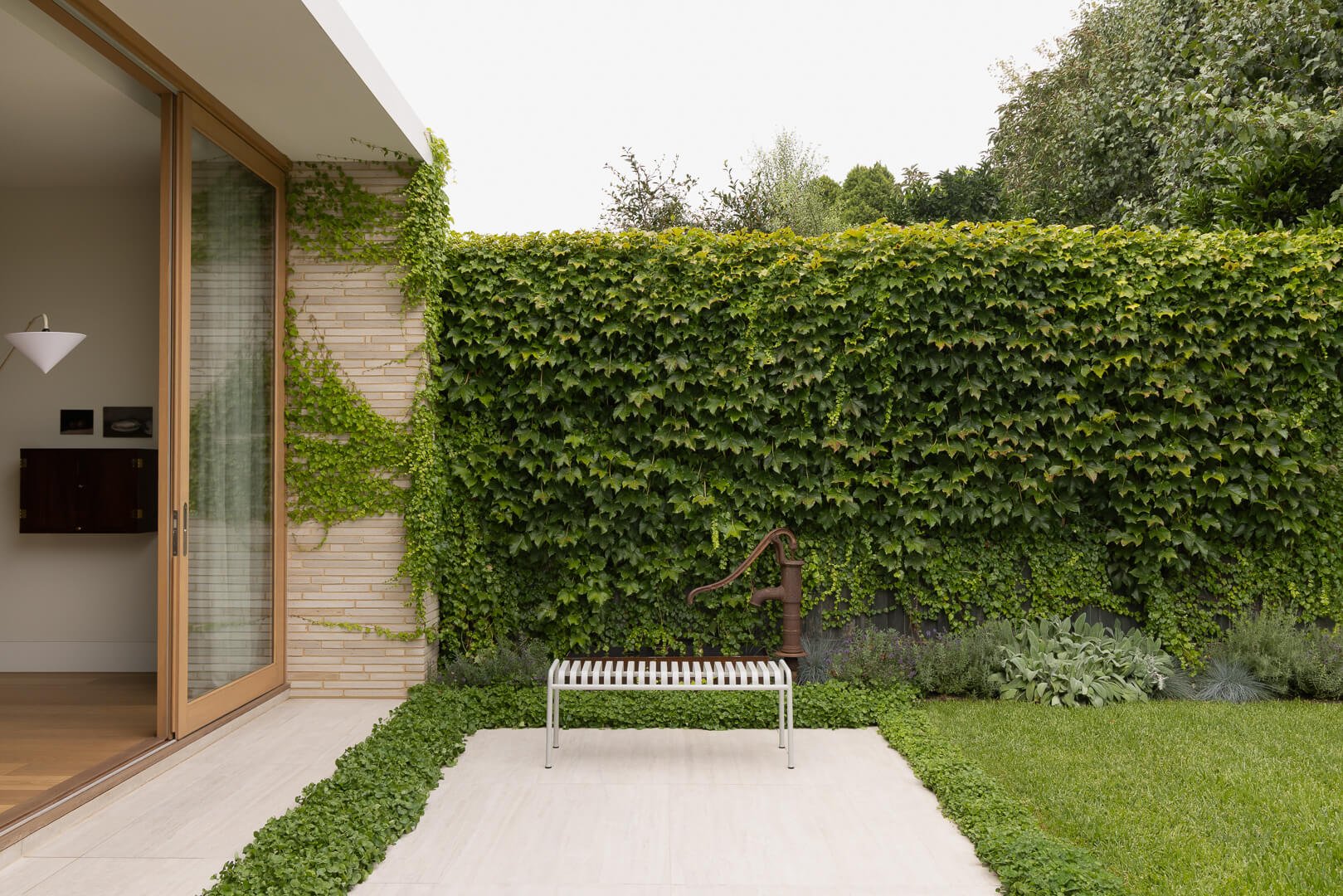
The relationship between architecture, interiors and landscape was also conceived as a continuous experience. Designed by a member of the client’s family, the garden adopts a restrained approach - minimal and clean yet intentionally unstructured, allowing planting to gradually soften and grow against the brick façade over time. This evolving greenery creates a gentle dialogue with the architecture, reinforcing the project’s balance between order and softness. A salvaged water pump from the client’s family farm has also been repurposed as a water feature, embedding a tangible piece of family history within the landscape. The garden reveals itself gradually - glimpsed through framed openings from within the house and becoming more immersive on approach, creating a quiet transition between the interior and surrounding landscape.
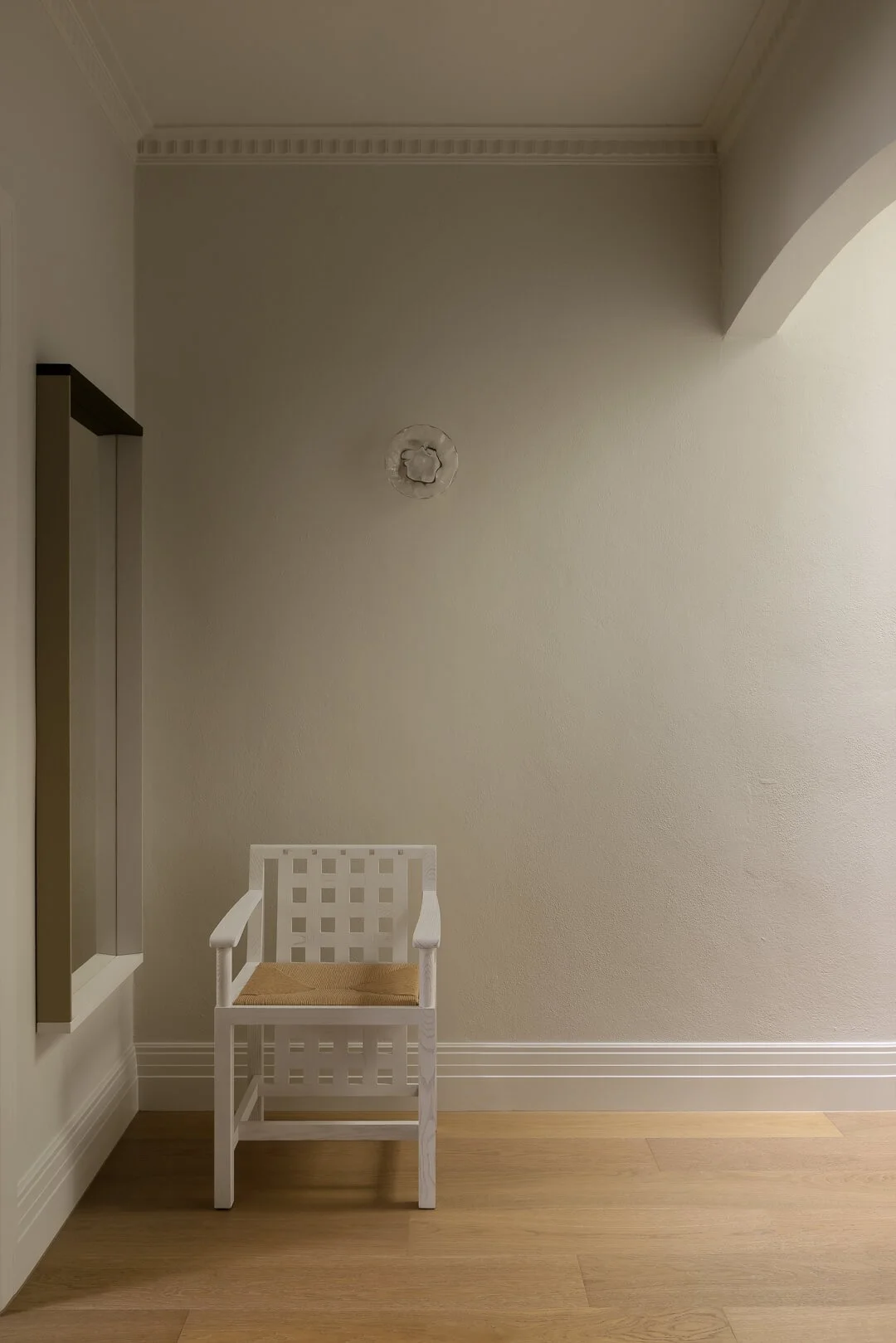
Throughout, Silver House is a project that balances old and new - not only architecturally, but curatorially. This interplay reflects a broader narrative within the home, heritage and progress, nostalgia and refinement. The result is a residence that feels deeply personal yet architecturally disciplined. It is a home shaped as much by memory and objects as by its walls and structure - and a place where rural references are translated through a contemporary lens.
Photographer: Timothy Kaye
Builder: Stevens Waters Building